
Advice
A Seasonal Pest Guide for Devon Homes
Pests follow the seasons, and knowing what to expect in each part of the year helps Devon householders spot problems early and act at the right time.
Read the guide →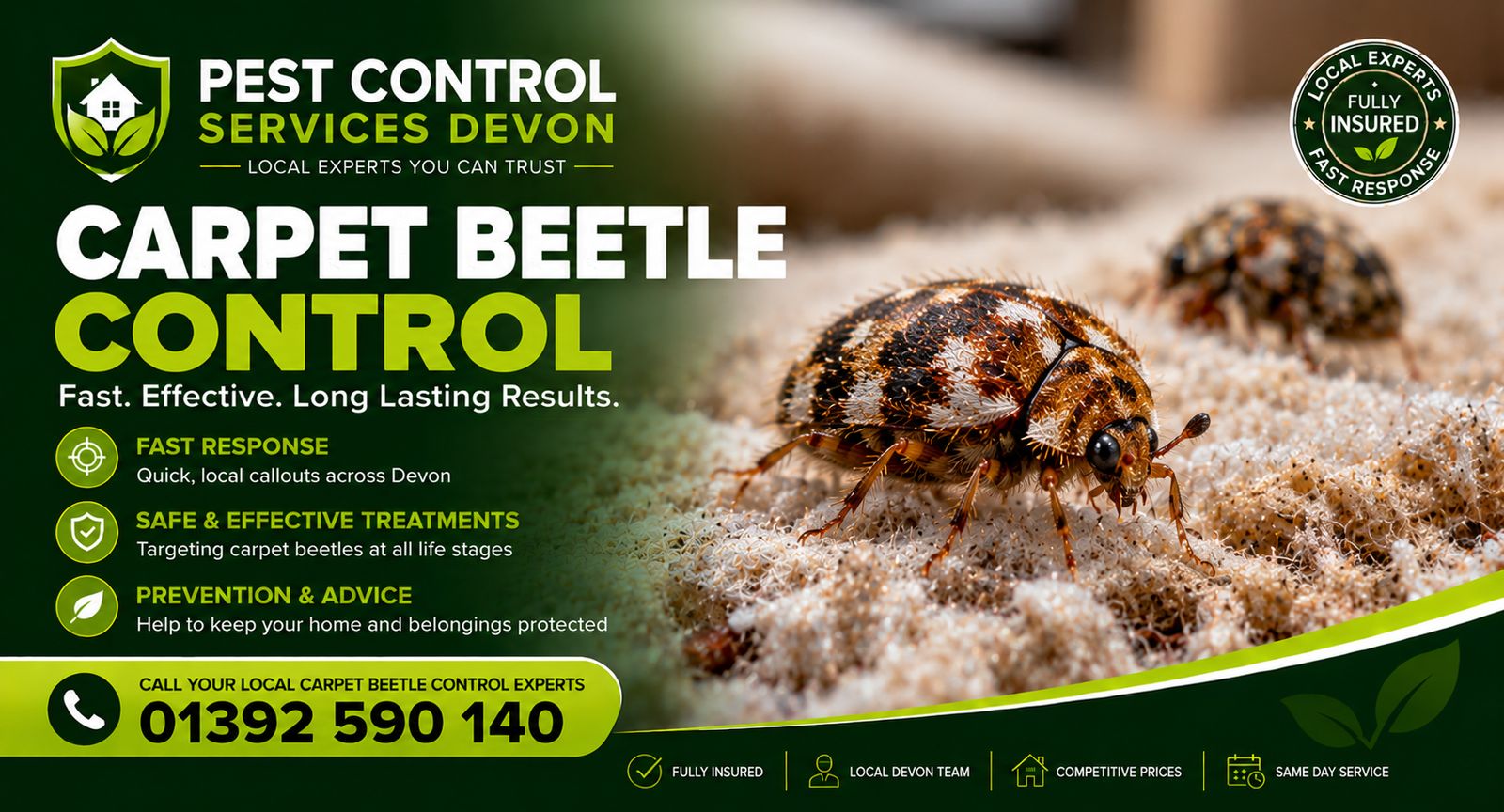
Carpet beetle damage is caused by the larvae, which feed on wool, fur, feathers and dust, and spotting it early makes the problem far easier to deal with.
Carpet beetles are small, rounded insects, and the adults are harmless to fabrics. They feed on pollen and nectar outdoors and often drift indoors through open windows. The damage comes from the larvae, which are small, hairy, brownish grubs that feed on natural materials.
They are often mistaken for clothes moth damage, but the larvae and the way they feed are different, so identifying them correctly helps you choose the right response.
Several species are found in British homes, and the larvae are usually only a few millimetres long. Because they hide beneath furniture and in the pile of rugs, damage can be well advanced before anyone notices it.
The larvae hide in dark, undisturbed places, so the first sign is often damage rather than the insects themselves. Look closely at the edges of carpets and under furniture.
Carpet beetles look for natural fibres and animal-based materials, so wool, silk, feathers, leather and fur are all at risk. They also eat the lint, hair and dust that gather beneath furniture and along skirting boards, which lets a colony build up unnoticed.
Another source is an old nest left by insects or other animals in the roof space or a wall cavity, where debris can sustain larvae that then work their way into the rooms below.
Carpet beetles are also attracted to pet hair, dead insects and spilt food, and a build-up of these in neglected corners can sustain larvae for a long time. Items kept in storage, such as stuffed toys, feather pillows and wool blankets, are common targets.
Older houses with wool carpets, thick curtains and plenty of boxed storage give larvae a lot to feed on. Holiday lets and second homes can be left empty for weeks, which allows damage to build up quietly, and coastal cottages often have draughty window frames that let adult beetles in.
Spring and early summer, when adults fly, is when many people first notice them indoors.
Furniture and rugs bought second-hand are worth inspecting before you bring them in, as they can carry eggs or larvae from the previous home. A quick look at the underside is usually enough to see shed skins.
Thorough cleaning removes much of the food and many of the larvae. Concentrate on the spots that rarely get attention, then keep the routine going for a few weeks.
Avoid spraying household insecticide across carpets or into clothing, because it is unlikely to reach the larvae in the base of a pile or in hidden gaps, and it can leave residues around children and pets. Do not simply throw away items and leave the source behind.
Check what the larvae are actually feeding on first, then deal with that source, otherwise new damage will soon appear in another room.
Likewise, painting over or covering damage does not stop it. The larvae will carry on feeding underneath until the source has been cleaned out or treated.
Call us if damage keeps spreading after careful cleaning, if you find larvae in several rooms, or if you suspect a nest or dead animal in a void. We can identify the insect, trace the source and treat affected areas safely.
To prevent a return, vacuum regularly, avoid leaving natural fabrics stored for long periods without checking them, and tidy up debris in lofts and cupboards.
No, the adults feed on pollen and nectar and do not damage fabric themselves. It is the larvae that chew through wool, fur, feathers and similar materials. Finding adults on window sills is still a useful warning that eggs may have been laid somewhere indoors.
Clothes moth damage often comes with silky webbing or cases, while carpet beetle larvae leave bristly cast skins and tend to graze across a surface. Both create holes, so if you are unsure which you have, we can identify it from a photo or a visit.
They do not bite or spread disease. The tiny hairs on the larvae and their cast skins can irritate skin or trigger a reaction in some sensitive people, so wear gloves and a mask when cleaning heavily affected areas, and vacuum rather than shake items out.
Washing fabrics that tolerate a hot wash removes larvae and eggs from those items. The insects may still be living in carpets, skirting boards or stored boxes, so wash what you can and clean the surrounding areas properly to avoid reinfestation.
If you would like a professional to look at the problem, call us on 01392 590 140 or send an enquiry.
Pests follow the seasons, and knowing what to expect in each part of the year helps Devon householders spot problems early and act at the right time.
Read the guide →Call us, message us on WhatsApp or send an enquiry. We will agree the price with you before any work starts.