
Advice
Grey Squirrels in the Loft or Roof Space
Grey squirrels can move into a loft to nest and chew, and because of the damage and welfare issues involved, professional help is usually the safest route.
Read the guide →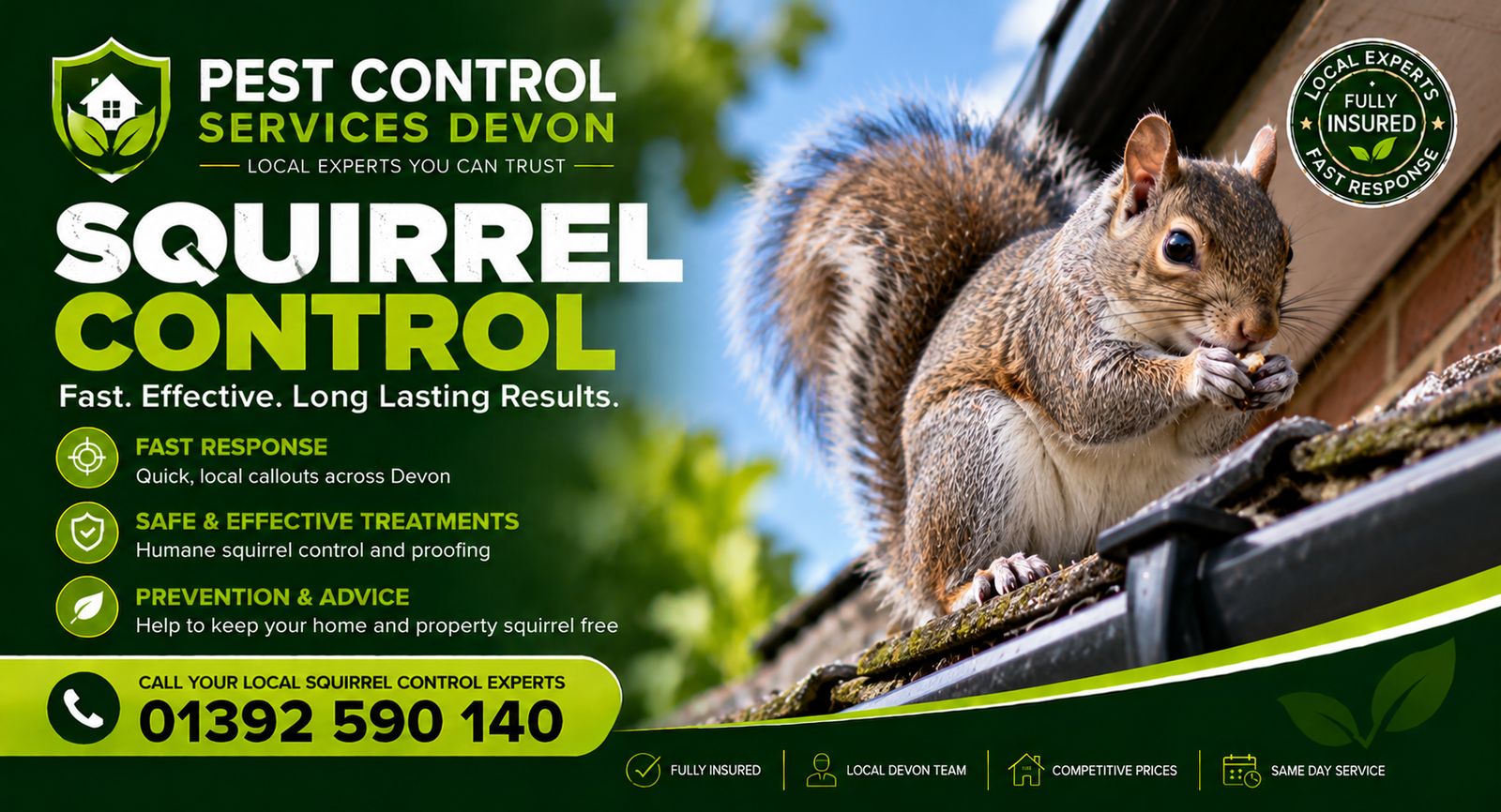
Grey squirrels look harmless in the garden, but once they move into a loft they can cause real damage. They gnaw timber, cables and pipework, tear up insulation and build nests, known as dreys, in warm quiet spaces. We provide squirrel control for homes, rentals, holiday lets and commercial buildings across Devon. We keep disturbance to a minimum and aim to deal with the problem calmly and efficiently.
Our approach is a survey first, then humane removal, then proofing so they cannot return. Laws apply to how grey squirrels may be handled, and our technician works lawfully throughout. The price is agreed before any work begins. You will always be told what is planned, what the work involves and what it costs before we start, and we are glad to answer any questions.
The most common sign is noise. Squirrels are active by day, so you may hear scampering, thumping or scratching in the loft around dawn and dusk, which is different from the night-time sounds of rats or mice. You might also see them running along fences, wires or branches towards the roof, or notice gnawed fascias and soffits. Squirrels also tend to return at the same times each day, so keeping a note of when you hear them is useful information to give us at the survey.
Inside, look for a nest of leaves, twigs and shredded insulation, chewed wiring, stripped timber and droppings. In the garden, squirrels dig up bulbs, strip bark from young trees and raid feeders. Damaged cables are a particular concern, because chewing can lead to electrical faults. A prompt survey helps limit the damage. Do not block a hole before checking that nothing is inside, because trapped animals can cause further damage trying to escape, and young may be left behind.
We start with a survey of the loft, roofline and surrounding trees to see how the squirrels are getting in and how many are present. Using humane live-capture and other lawful methods, we remove them in a controlled way. We keep disturbance to a minimum, and we explain what will happen at each stage so you know what to expect. Our technician checks the loft carefully for young, as nesting season affects how and when work can be carried out lawfully and humanely.
The most important step comes next. We find the entry point and repair or cover it, filling gaps at the eaves, fascias, vents and roof edges so squirrels cannot get back in. We also advise on trimming branches that give easy access and on clearing out contaminated insulation. A sealed roofline is what makes the result last. Where contaminated insulation or droppings need clearing, we can advise on safe handling and on when a thorough clean-out is worth arranging.
Devon is well wooded, with mature gardens, hedgerows, parkland and older houses that have timber eaves, slate roofs and plenty of small gaps. Squirrels can run straight from tree to roof, so homes near woodland, lanes and large gardens are often affected, as are outbuildings, barns and period properties. Rural roads, large gardens, churchyards and wooded valleys all offer squirrels routes onto roofs, and timber barns and stables are also vulnerable to gnawing. Even a modest garden with a few mature trees can be enough to bring squirrels close to the roof.
Holiday lets and second homes can be at risk, since a quiet loft in a house that stands empty for weeks is attractive to a squirrel looking for a nest. Landlords, managing agents and businesses can also call on us. Acting early can prevent costly repairs, because damage to timber and wiring tends to worsen over time. Whatever the building, we explain our findings clearly and give practical advice that suits how the property is used.
Grey squirrels are subject to rules about how they may be controlled and released. Our technician handles this lawfully and explains what is involved. We do not release them back into the wild, and we use only methods that are permitted. We also take care to explain what happens to the animals afterwards, so you know the work is carried out responsibly.
Squirrels are noisy during the day, especially around dawn and dusk, while rats are mainly heard at night. Nests of leaves and twigs suggest squirrels. If you are unsure, our survey will identify what is living there. Larger lofts and several entry points may need more than one visit, which we will make clear when the work is quoted.
Yes, that is a key part of the job. We find how they got in, repair or cover the entry point and close other weak spots along the roofline. We also advise on branches and other routes that allow access. Fixing the entry point promptly is important, since squirrels are persistent and will test weaknesses repeatedly.
They can. Gnawed cables are a fire risk, chewed timber weakens roof structures and nesting spoils insulation. Droppings and urine can also soil loft spaces. Dealing with them early usually means smaller repairs and a quicker, simpler job. Call us if you are unsure, and we will tell you what we think is the likely cause and the next step.
Choose your town or village.
“Paul dealt with our flea Problem quickly and effectively Stuart was extremely helpful and professional and I can highly recommend this company. From A very satisfied customer”
P Shaldon Devon“Great post fast removal of the wasp nest and very freindly Thanks”
Alvan Spicer“Very professional and knowledgeable- nothing is too much trouble....would highly recommend. Thank you....”
June SalthouseGrey squirrels can move into a loft to nest and chew, and because of the damage and welfare issues involved, professional help is usually the safest route.
Read the guide →Call us, message us on WhatsApp or send an enquiry. We will agree the price with you before any work starts.