
Advice
A Seasonal Pest Guide for Devon Homes
Pests follow the seasons, and knowing what to expect in each part of the year helps Devon householders spot problems early and act at the right time.
Read the guide →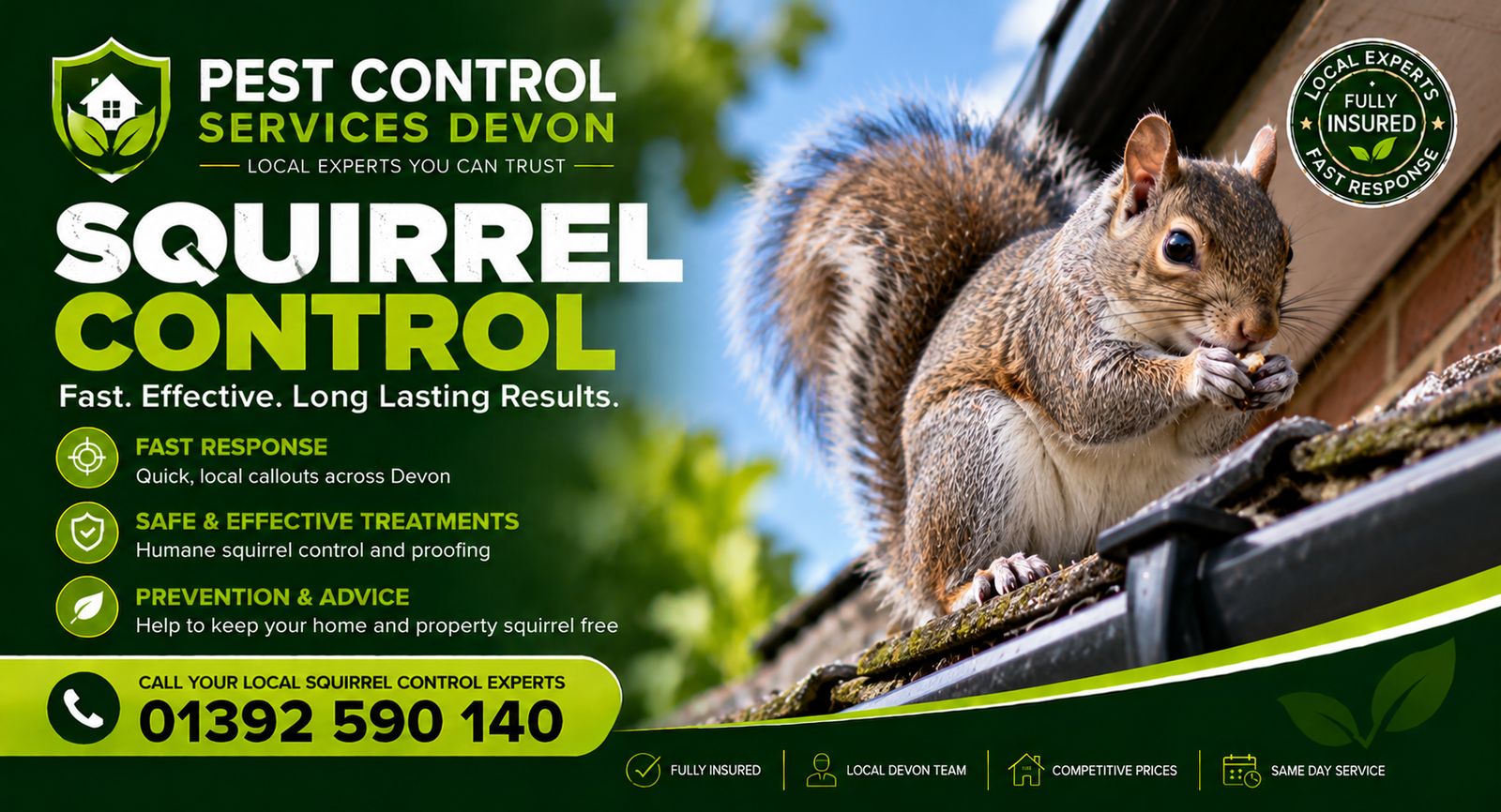
Grey squirrels can move into a loft to nest and chew, and because of the damage and welfare issues involved, professional help is usually the safest route.
A roof space is warm, dry and quiet, which makes it an appealing place for a grey squirrel to build a nest, particularly in late winter and spring when females look for a sheltered site to raise young. Homes close to mature trees, woodland or large gardens are most likely to be chosen.
Squirrels are strong climbers and agile jumpers, and they can reach roofs from branches, walls, fences and cables. They often get in through small gaps at eaves, fascias or damaged tiles.
Grey squirrels are common across Devon, in towns as well as the countryside, and they readily take advantage of a weakness in an older roof. Once one has found a way in, others may follow it, so early action is sensible.
Squirrels are active mainly by day, which helps tell them apart from rats and mice that tend to be heard at night. Listen in the early morning and late afternoon.
Rats can also live in lofts, so it is useful to know which animal you have before anything is done. The timing, sounds and signs described above help, and we can check safely if you are unsure.
Squirrels gnaw constantly to keep their teeth in trim, and in a loft that can mean chewed timber, insulation and water pipes. Gnawed electrical cables are a particular concern, because bare wires can create a fire risk.
Nesting material can block gaps or flues, and droppings and urine soil insulation. A nest with young inside also raises welfare questions, so the timing of any work matters.
There is not a great deal that is safe to do at home, but a few sensible steps help us identify the problem and prevent it getting worse.
Avoid feeding squirrels in the garden, as regular food close to the house encourages them to explore the roof and eaves. Ask neighbours to keep nut and seed supplies tidy as well, because squirrels move easily between properties.
Do not block holes while you are unsure whether the squirrels are still inside, as this can trap them in the roof space where they may chew their way out, cause more damage or die. Do not put down poison or try to catch or handle a squirrel yourself.
Squirrels can bite and scratch if cornered, and there are rules about how wild animals may be controlled, so it is better to take advice before any action.
If you think there are squirrels in your loft, please call us early. We can confirm what is there, check for young, and plan a humane and lawful way to resolve the problem. Moving quickly limits chewing damage to wiring and timber.
Once the animals have gone, we can advise on proofing the entry points, and where droppings or soiled insulation need dealing with, we can recommend the right clean-up.
It also helps to tell us about any recent storm damage or building works, since disturbed tiles and open eaves are often how the animals first got in.
Squirrels will try again if a gap remains. Have the roof, eaves, fascias and soffits checked for damage, and repair them with sturdy materials once the loft is clear.
Keep tree branches cut back from the roofline, and check vents and roof junctions after storms. Regular inspections each autumn help you catch weaknesses before the breeding season, which is useful for older Devon houses with timber eaves.
Squirrels are mainly active in the daytime, often early morning and late afternoon, while rats are more often heard at night. Squirrel droppings and nests also look different. If you are unsure, do not go into the loft and ask us to identify the cause.
It is risky to seal a hole while you do not know if animals are still inside. They can become trapped and cause more damage, or young could be left stranded. It is better to have the situation checked first, then proof the roof once it is clear.
They can be, because squirrels chew cables and bare wiring is a recognised hazard. If you suspect chewed wires, avoid touching anything and have an electrician check the circuits. Dealing with the squirrels quickly reduces the chance of further damage.
Activity often rises in late winter and spring when females seek sheltered places to raise young, and a second period can follow later in the year. Squirrels can use a loft at other times, so any daytime scratching overhead is worth investigating.
If you would like a professional to look at the problem, call us on 01392 590 140 or send an enquiry.
Pests follow the seasons, and knowing what to expect in each part of the year helps Devon householders spot problems early and act at the right time.
Read the guide →Call us, message us on WhatsApp or send an enquiry. We will agree the price with you before any work starts.