
Advice
A Seasonal Pest Guide for Devon Homes
Pests follow the seasons, and knowing what to expect in each part of the year helps Devon householders spot problems early and act at the right time.
Read the guide →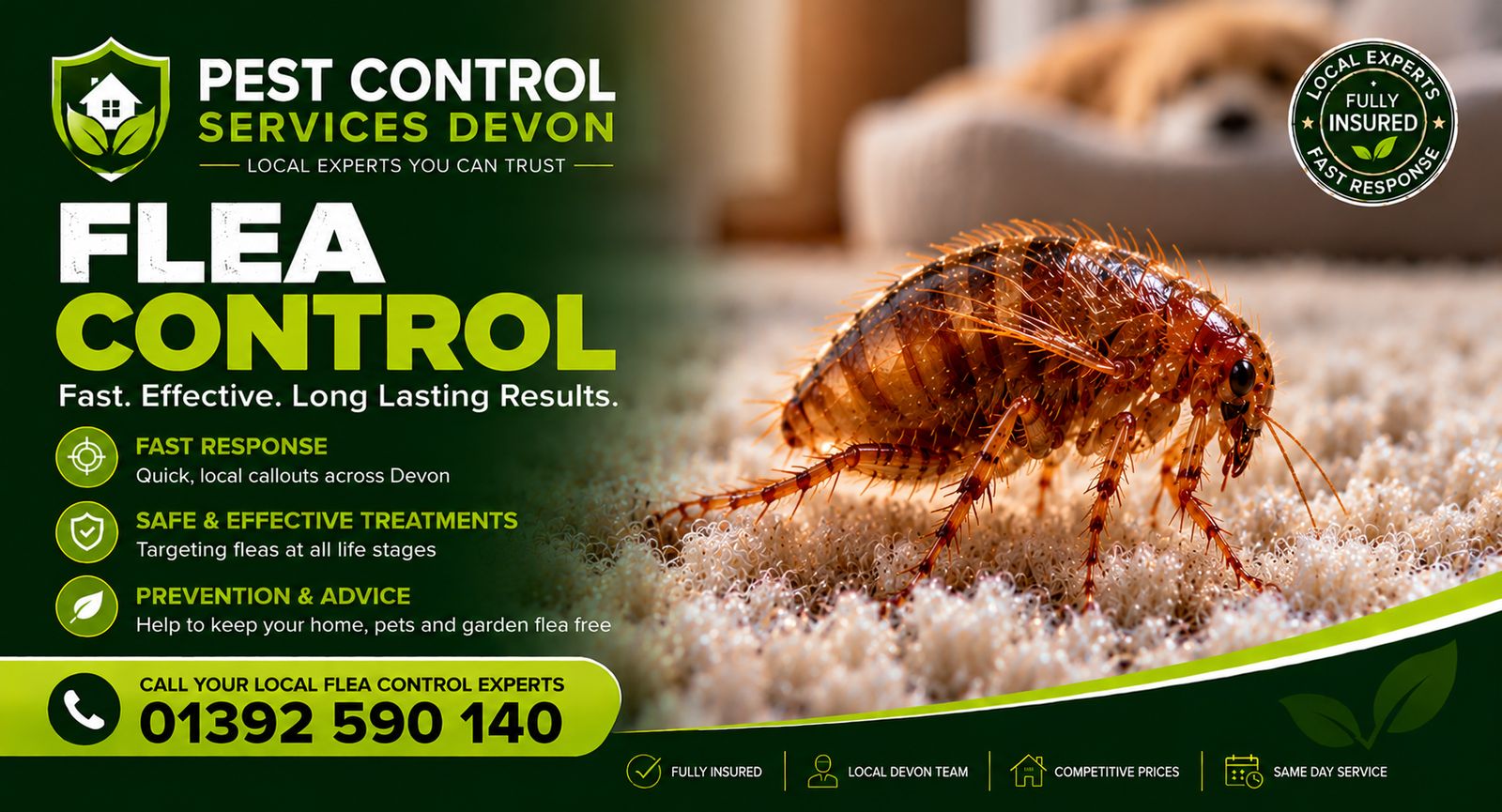
Fleas spend most of their life cycle in carpets, bedding and furniture rather than on your pet, so clearing them means treating the pet and the home together.
Fleas are tiny, wingless, dark brown insects that feed on blood and can jump a surprising distance. Most people notice them on a cat or dog, or as itchy bites around their own ankles and lower legs. The adults you see are only a small part of the picture, though.
Eggs fall off the animal and settle into carpets, floor gaps, sofas and bedding, where they hatch into larvae and later pupae. The pupae can stay dormant for weeks, then emerge when they sense warmth and movement. That hidden stage is why fleas often seem to return after you thought they were gone.
Fleas are easiest to confirm by looking at your pet and the places it sleeps. Part the fur near the base of the tail, the belly and the neck, where fleas are often found. Watch for repeated scratching, licking or biting at the skin.
These are the usual signs in the home.
Fleas often arrive on a pet that has met other animals, or on wild visitors such as hedgehogs, foxes or rodents passing through the garden. They can also be waiting in a property, especially in a holiday let or second home that was left empty, where dormant pupae wake up when new people and pets arrive.
Warm, centrally heated homes keep fleas developing for much of the year, not only in summer. Soft furnishings, thick carpets and cracks between floorboards provide plenty of cover for the early stages.
Begin with your pet, because the animal is the main source. Ask your vet to recommend a flea treatment suited to its species, weight and age, and follow the instructions carefully. Treatments made for dogs can be dangerous for cats, so never swap one for the other.
Then work through the home. Wash bedding, throws and soft toys on a hot setting, vacuum carpets, rugs, sofas and floor edges every day or two, and empty the contents into a sealed bag outdoors. Regular vacuuming also encourages pupae to hatch, which exposes them to treatment.
Avoid applying home remedies or garden products to your pet, which can irritate skin or cause harm. Do not use shop-bought household sprays or foggers around babies, pets, fish tanks or food areas, and do not mix products unless the label clearly allows it.
Do not stop too early. Fleas may disappear for a few days and then return as pupae hatch, so giving up as soon as the bites stop is a common mistake. Equally, do not assume the home is clean because the pet looks fine, as most of the population is hidden in the surroundings.
Ask us for help if fleas persist after a few weeks of consistent pet treatment and cleaning, if you are bitten even though you have no pets, or if you have moved into a property that was empty or had animals living in it. Heavy infestations, especially in carpeted bedrooms and lounges, can be hard to clear alone.
A professional visit identifies the insect, since bites can also come from other pests, and treats the rooms where the early stages are hiding. We explain how to prepare the home and how long to keep pets and children out of treated areas, so the work is safe and effective.
The simplest prevention is regular, vet-recommended flea treatment for every cat and dog in the home, all year round. This stops small numbers of fleas from building up into a household problem.
Keep up routine vacuuming, wash pet bedding often and check your pet after walks or contact with other animals. If you run a holiday let that accepts dogs, vacuum thoroughly between guests and ask visitors to keep their pets treated. Keeping wild animals away from doorways and under decking also helps.
Fleas bite people but do not normally stay on human skin for long, because they prefer the fur or feathers of animals. You are more likely to notice itchy bites on your lower legs as the fleas jump from the carpet. Treating the source is what stops them.
It often takes several weeks. Adult fleas are only a small share of the total, and new ones keep emerging from pupae hidden in the home. Consistent pet treatment, regular vacuuming and washing are needed until the cycle is broken. Persistent cases may need professional treatment.
Yes. Fleas can come from wild animals or rodents, or be waiting in a property that was empty or previously home to pets. Dormant pupae can wake up when someone moves in. If you are bitten without any pets, it is worth having it checked.
For most people, flea bites cause itching and small red marks and are not serious. Scratching can break the skin and lead to infection, and some people react more strongly. If you are concerned about a reaction, speak to a pharmacist or doctor.
If you would like a professional to look at the problem, call us on 01392 590 140 or send an enquiry.
Pests follow the seasons, and knowing what to expect in each part of the year helps Devon householders spot problems early and act at the right time.
Read the guide →Call us, message us on WhatsApp or send an enquiry. We will agree the price with you before any work starts.