
Advice
A Seasonal Pest Guide for Devon Homes
Pests follow the seasons, and knowing what to expect in each part of the year helps Devon householders spot problems early and act at the right time.
Read the guide →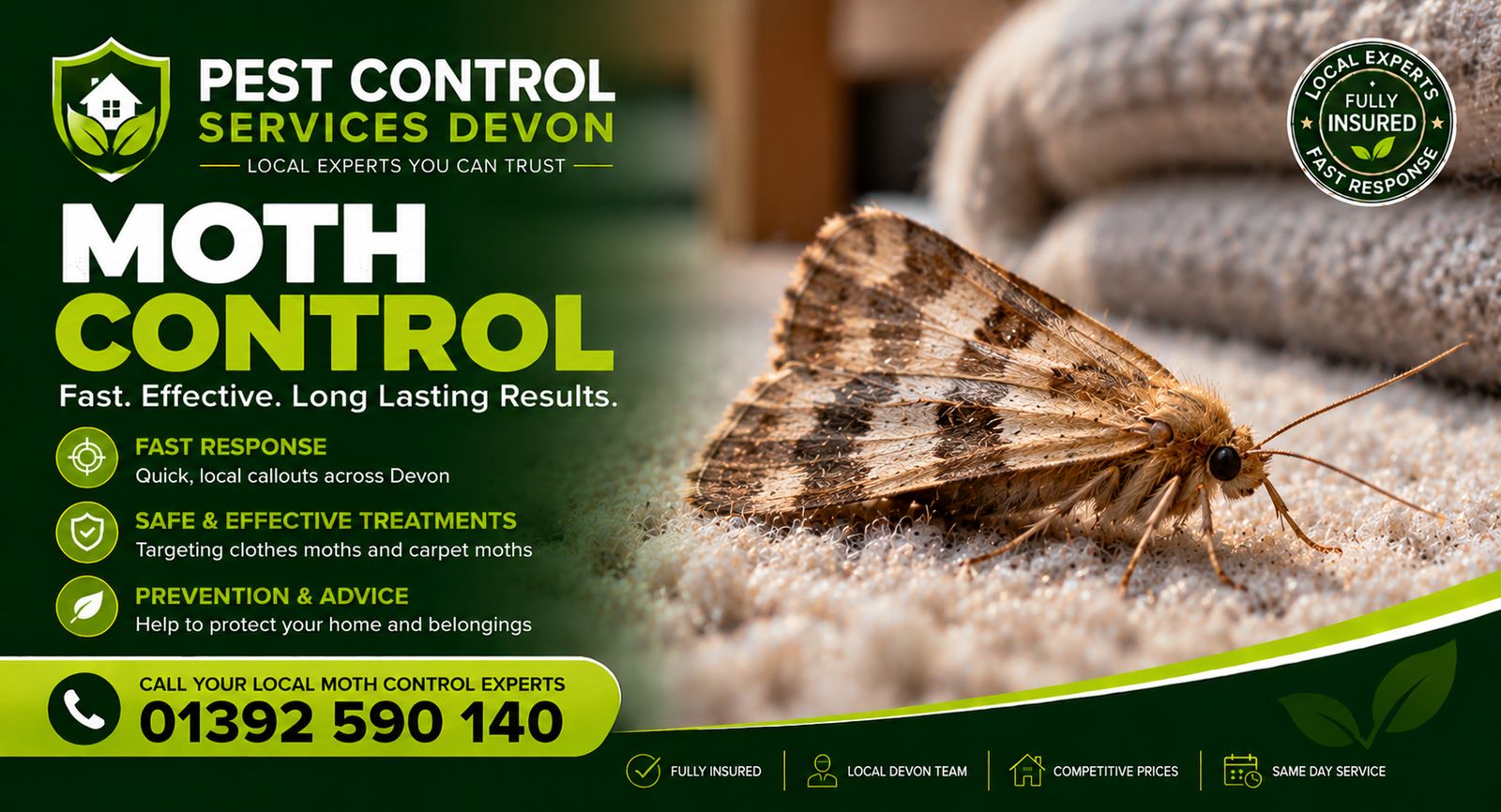
Clothes moth caterpillars feed on wool, fur and other natural fibres, so regular checks, clean storage and tidy habits go a long way to protecting your belongings.
The small pale moths you may see fluttering in a bedroom do not eat fabric. The damage is done by their caterpillars, which hatch from tiny eggs laid on suitable material and feed on natural fibres such as wool, cashmere, silk and fur.
Clothes moths prefer dark, quiet, undisturbed places, so a wardrobe full of jumpers or a rolled-up rug in a spare room is just what they look for. They tend to avoid bright, busy spaces.
The adults live for a short time and rarely fly far, so if you see moths indoors the caterpillars are usually close by. Dealing with them early protects clothing, blankets and carpets that can be costly or impossible to replace.
Moth activity often goes unnoticed for months because it happens out of sight. Go through the items you wear least, and look at seams, folds and collars.
A musty smell is not a reliable sign, so rely on actual checks. Hold knitwear up to the light, run your fingers along seams, and look underneath wardrobes where fluff and dust gather.
Moths are drawn to fabric that carries sweat, food stains or body oils, because soiled natural fibres are easier for the caterpillars to feed on. Clothes put away without washing are a common starting point.
They can also come in on second-hand furniture, vintage clothing, rugs and charity shop finds. Older Devon houses with deep cupboards and quiet spare rooms, and holiday lets that stand empty over winter, give them long periods without disturbance.
Heating that is switched off for long periods in unused rooms means little disturbance, and a stable temperature can suit the insects. Rooms facing the sea or the moor edge can also be damp, and damp fabric is more attractive to them.
Regular cleaning and checking are your strongest defences. Start with a thorough clear-out of any wardrobe or drawer where you have found signs.
Do not pack away worn clothes without washing them first, as this is one of the most common causes. Avoid hanging treated items near food or bedding, and do not spray unknown products into wardrobes or on fabrics you wear against your skin.
Throwing out one damaged jumper rarely solves the problem if the carpets or other stored textiles are also infested, so check the whole room before you decide the issue is finished.
After cleaning, leave the wardrobe doors open for a while to let it dry and air out, then repack with clean items only. Repeating the check a few weeks later shows whether any eggs have hatched since.
If you keep finding new damage, see moths in several rooms, or suspect infested carpets, underlay or hidden stored items, it is time to call us. A professional can identify the species, trace the source and treat carpets, edges and cupboards in a way that is safe for your home.
This is especially useful for valuable rugs, fitted carpets and holiday lets where a lasting fix matters.
Do keep photographs of what you see, which helps us tell moth damage from beetle damage, and note which rooms are affected.
Build a seasonal routine. Wash clothes before storing them, check stored items every few months, and keep wardrobes tidy so you notice changes quickly.
Open wardrobes and let air and light in from time to time, and avoid leaving heaps of clothing on floors. Inspect second-hand items before bringing them inside, and ask us for advice if you are unsure.
They prefer animal-based fibres such as wool, silk, fur and feathers. They may damage blends, and cotton or synthetic clothes that are stained with food or sweat can be nibbled when the caterpillars are hungry. Clean fabrics made only of cotton or synthetics are much less at risk.
Many people use a freezer for small items, sealing them in a bag first, and it can help for something you can fit in. It does not deal with the carpets, cupboards and corners where the moths came from, so cleaning the surrounding space is still needed.
You may be seeing early activity before visible damage, or moths that are a different harmless kind such as a pantry or house moth. Check wool, folds and seams carefully and look for webbing. If you are unsure, we can identify what you have found.
A look every few months is sensible, with a closer inspection at the change of season when you swap clothes around. Check seams and folds on wool and look at the floor beneath the wardrobe. Catching early signs makes treatment simpler.
If you would like a professional to look at the problem, call us on 01392 590 140 or send an enquiry.
Pests follow the seasons, and knowing what to expect in each part of the year helps Devon householders spot problems early and act at the right time.
Read the guide →Call us, message us on WhatsApp or send an enquiry. We will agree the price with you before any work starts.