
Advice
Signs of Rats in Your Home or Garden and What to Do
Rats are secretive and mostly active at night, so the signs they leave behind are often the first and clearest way to know they are there.
Read the guide →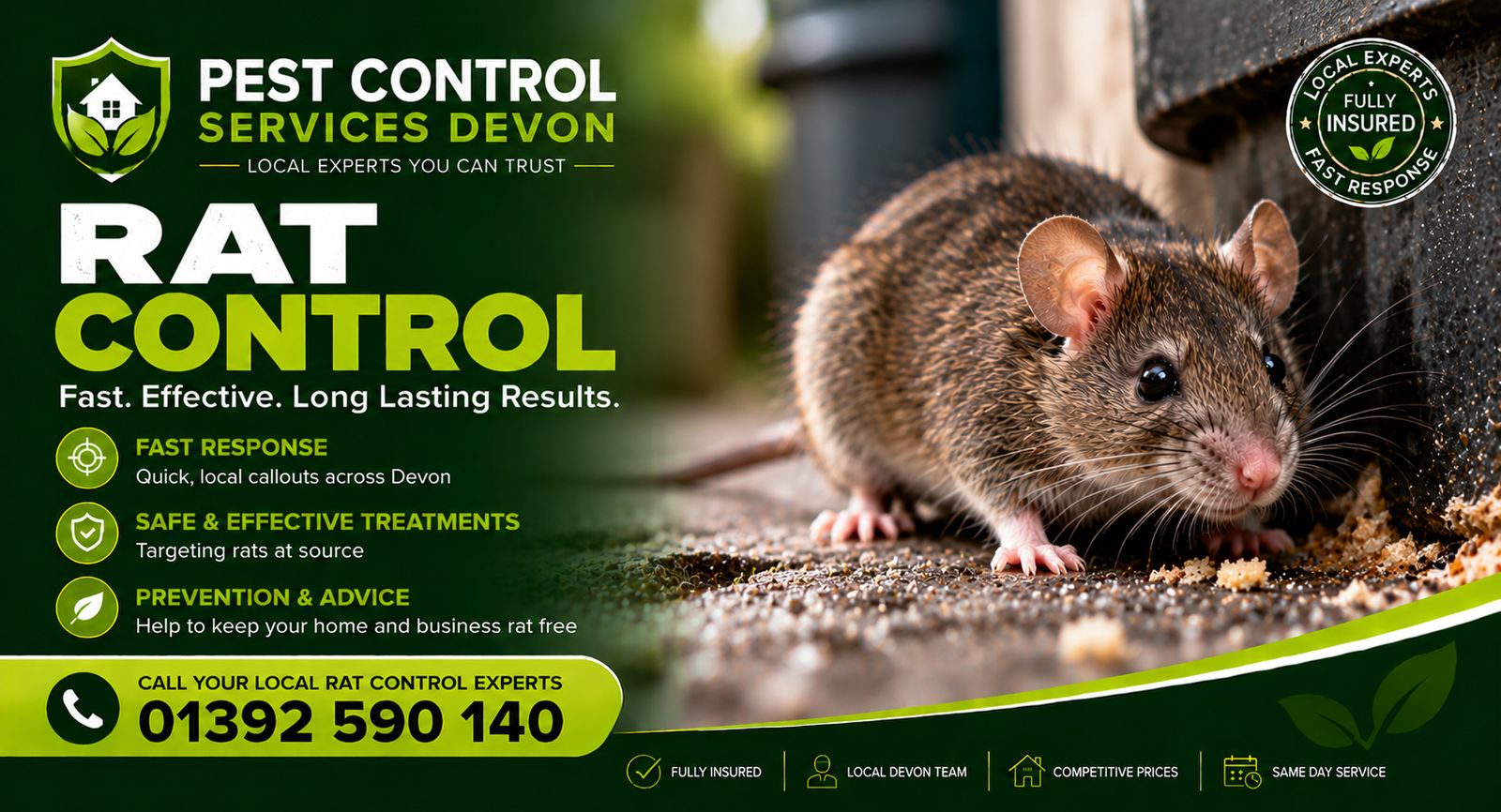
Rats come into gardens for food, water and cover, so taking those away is the most reliable way to make your outdoor space less welcoming.
Gardens often provide everything a rat needs: food scraps, spilt feed, water, and plenty of cover under sheds, decking and thick planting. In Devon, gardens close to farmland, hedgerows, rivers and the coast are especially likely to be visited, as are properties beside food outlets and holiday lets with busy bins. A visit does not mean your home is dirty. It only means the garden offers an easy meal.
Understanding this helps you act sensibly. You do not need to remove everything that makes a garden pleasant. The aim is simply to take away easy food, keep hiding places to a minimum and make it harder for rats to travel unseen from the boundary to your doors.
Watch for burrows with smooth, worn entrances beside walls, under sheds and in compost heaps. Look for flattened tracks through long grass, droppings near bins, and gnawing on bags, feed containers and wood. Seeing a rat in daylight, or hearing noises from a shed after dark, suggests they are using the space regularly and may be moving closer to the house.
These signs are easier to spot in the evening or early morning, and after rain when fresh soil shows at burrow entrances. A quick walk around the boundary once a week is enough to notice a change early, before a few visitors become a settled population.
Bins are among the biggest attractions. Use bins with tight fitting lids, keep them closed, and avoid leaving bags on the ground beside them. Rinse food containers before putting them out, and clean up spills straight away. Never put cooked food, meat or fish into an open compost heap. A well managed, closed compost bin is far less appealing to rats than a loose heap.
Rats like hiding places close to food. Tidy stacks of timber, boxes and pots, cut back dense ivy and overgrown borders against walls, and keep grass short near buildings. Raise sheds, log stores and decking if possible, so there is no sheltered space beneath. Repair dripping taps and hoses, and do not leave buckets or containers collecting water, since rats need a regular drink.
None of this needs expensive work. A free weekend spent clearing clutter, trimming growth and tightening up storage can make a visible difference, and it helps other wildlife too, since a tidy garden also gives neighbouring pests less to feed on.
Do not scatter poison or loose bait, as it can harm children, pets, hedgehogs and other wildlife, and rats may die in places you cannot reach. Do not handle rats or their droppings with bare hands. Avoid feeding wild animals on the ground, since leftover food draws rats quickly. Blocking burrows without dealing with the rats can simply push them elsewhere, such as into your outbuildings.
If you can see burrows, regular droppings or a rat in daylight, it is time to call us. Active rats breed quickly, and tidying up alone will not remove ones that have already settled. We can identify how they are getting in, treat the problem safely with care for pets and wildlife, and suggest the right proofing for your property.
Check the garden every few weeks, especially in autumn when rats look for winter shelter. Fill gaps under sheds, fit mesh over drains and vents, and look for new holes beside walls. Share these habits with neighbours, because rats do not stop at fence lines. A tidy, secure outdoor space, combined with prompt action at the first sign, usually keeps them away.
If activity returns after you have tidied up, do not wait for it to build. A short call to us early on is far easier than dealing with a larger group later in the season.
Spilt seed on the ground certainly can. If you feed wildlife, use feeders with trays that catch the seed, put out small amounts and sweep up daily. If you start to see rats, stop feeding for a while and speak to us.
Yes. Rats can squeeze through surprisingly small gaps around pipes, air bricks, doors and drains, then gnaw to enlarge them. Sealing gaps and keeping the garden tidy reduces the risk, but active rats should be treated by a professional.
It can be if it contains cooked food, meat or fish, or if it is an open heap with cover around it. A closed compost bin, fed with raw vegetable matter and garden waste, is much less attractive to rats.
Removing food and cover helps and may discourage new visitors, but rats already living in your garden tend to stay while food is still available nearby. If you see signs of burrows or regular activity, call us for treatment.
If you would like a professional to look at the problem, call us on 01392 590 140 or send an enquiry.
Rats are secretive and mostly active at night, so the signs they leave behind are often the first and clearest way to know they are there.
Read the guide →Pests follow the seasons, and knowing what to expect in each part of the year helps Devon householders spot problems early and act at the right time.
Read the guide →Call us, message us on WhatsApp or send an enquiry. We will agree the price with you before any work starts.