
Advice
How to Keep Rats Away From Your Garden and Bins
Rats come into gardens for food, water and cover, so taking those away is the most reliable way to make your outdoor space less welcoming.
Read the guide →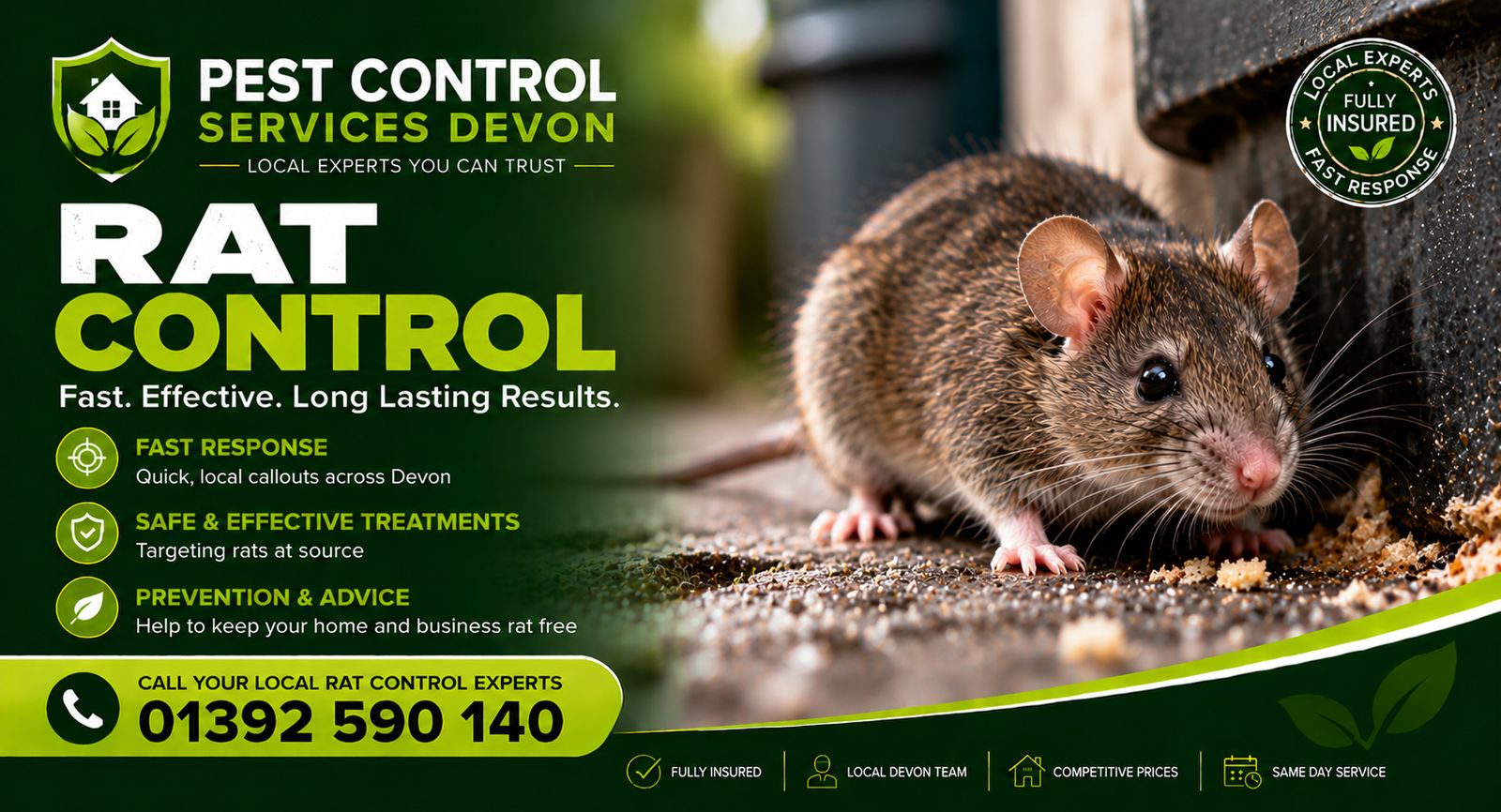
Rats are secretive and mostly active at night, so the signs they leave behind are often the first and clearest way to know they are there.
Rats look for food, water and warm shelter, and an ordinary home or business can offer all three. In Devon we see them around older houses with gaps in the brickwork, near farmland and moor edges, along rivers and the coast, and behind restaurants, pubs and holiday lets where food waste is stored. Colder weather in autumn often pushes them indoors, although they can be a problem at any time of year.
Knowing why rats are there is half the battle. If we can see what is drawing them in, such as open food waste, a leaking pipe or a hole in the brickwork, we can help you fix the cause rather than only the symptoms.
Rats are nocturnal, so you may hear them before you see them. Scratching, scuttling or thumping in the loft, between floors or inside wall cavities, most often after dark, is a common first sign. Look closely at kitchen cupboards, under sinks and around pipework, where droppings and gnaw marks often show up.
Fresh droppings tend to look dark and moist, while old ones are dry and crumbly, which helps show whether the activity is current. Checking the same spots over a few days tells you if the signs are building up, and that is useful to tell us when you call.
Outside, rats leave burrows under sheds, decking, patios and compost heaps, usually with a smooth, worn entrance about the size of a fist. Look also for gnawed feed containers and sacks, trampled runs through long grass and droppings near bins. Chewed bags of waste and dug up lawn edges can also point to a visiting rat. Rats often travel along the same routes each night.
Concentrate on removing what attracts them. Store food in sturdy, lidded containers, clear up spilt food and keep rubbish in closed bins. Fix dripping taps and leaks, and trim back dense growth against walls. Make a note of where and when you see signs, as this helps us find the main routes. If you find droppings, avoid touching them directly.
Do not handle rats, live or dead, with bare hands, and do not try to corner them. Do not put down poison or loose bait yourself, as it can harm children, pets and wildlife, and a rat that dies inside a wall or ceiling can cause a lasting smell. Blocking holes before the rats are dealt with can trap them inside and make them gnaw elsewhere.
Call us as soon as you see clear signs. Rats breed quickly, and a small problem can turn into a large one within a few months. They gnaw cables and can contaminate food and surfaces, so businesses, kitchens and holiday lets should not wait. We will find the entry points, treat the problem safely and advise on proofing so they do not come back.
Early action is usually quicker and simpler for everyone. We will explain what we find in plain terms, agree a sensible plan with you and tell you what to watch for afterwards.
Prevention is mostly about closing gaps and removing food. Seal holes around pipes, repair damaged air bricks and fit door brushes or strips on outside doors. Keep compost bins well managed, do not leave pet food outside overnight and clear up fallen fruit. Check drains and outbuildings now and then, and ask us if you spot new gnawing or droppings.
Rat droppings are larger than those of mice, and rats leave bigger gnaw marks and make heavier sounds. Mice tend to make finer scratching noises. If you are unsure which you have, we can identify it from the signs and treat accordingly.
Rats can spread germs through their droppings, urine and by contaminating food and surfaces, so they should be dealt with promptly. Avoid direct contact, wash your hands after any cleaning and call a professional rather than handling them.
Rats are mainly active after dark, when the house is quiet. Noise in the loft or walls at night is a very typical sign. During the day they usually rest hidden, so seeing one in daylight can mean a large infestation.
Seldom. If they have food, water and shelter they tend to stay and breed. Removing attractions helps, but a developing problem usually needs professional treatment and proofing so that they cannot simply return.
If you would like a professional to look at the problem, call us on 01392 590 140 or send an enquiry.
Rats come into gardens for food, water and cover, so taking those away is the most reliable way to make your outdoor space less welcoming.
Read the guide →Pests follow the seasons, and knowing what to expect in each part of the year helps Devon householders spot problems early and act at the right time.
Read the guide →Call us, message us on WhatsApp or send an enquiry. We will agree the price with you before any work starts.