
Advice
Protecting Wardrobes and Carpets From Moths
Clothes moth caterpillars feed on wool, fur and other natural fibres, so regular checks, clean storage and tidy habits go a long way to protecting your belongings.
Read the guide →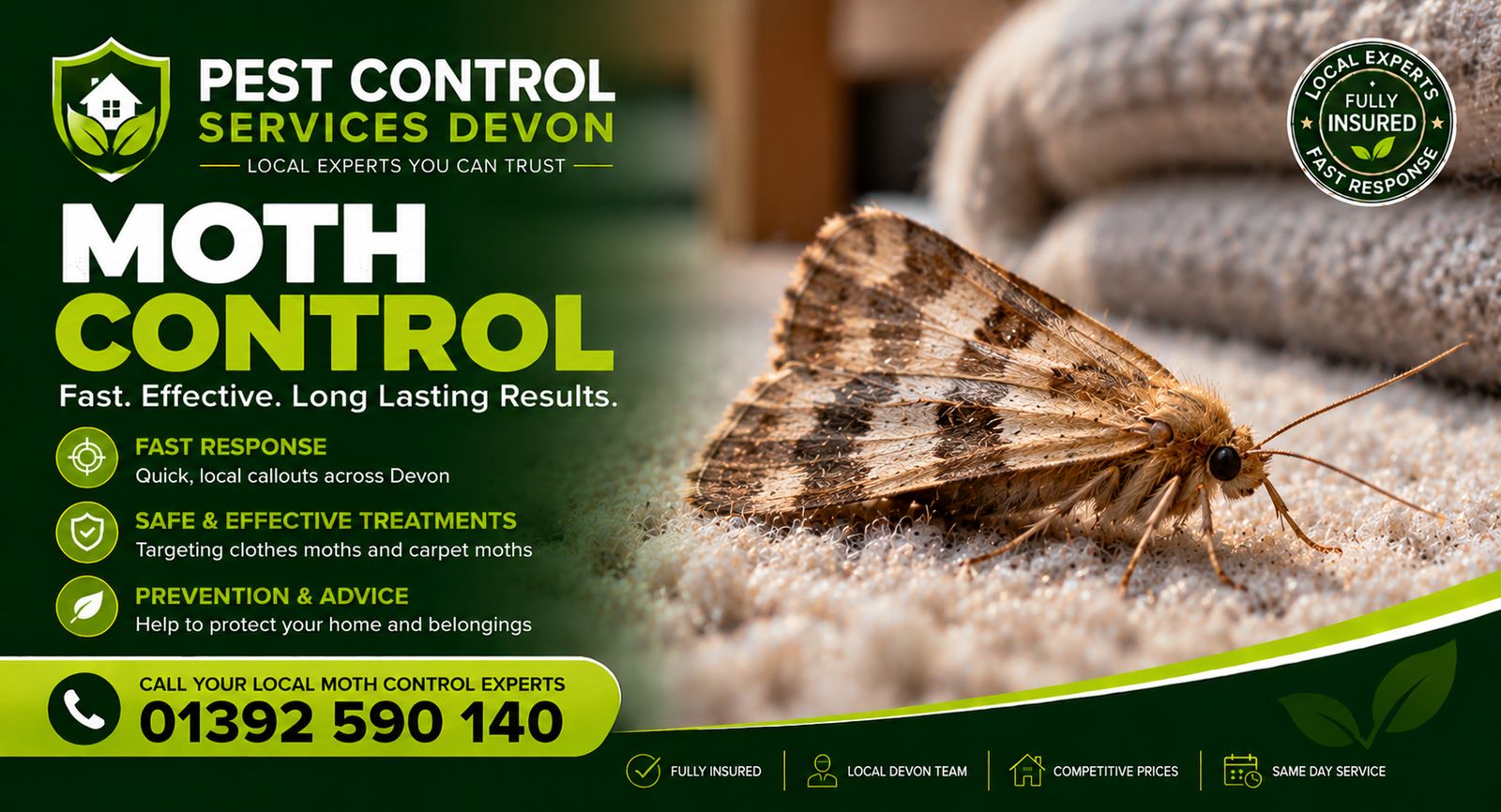
Moths do not care whether a house is new or old. In Ivybridge we get calls about holes in jumpers, webbing in carpets and small moths in kitchen cupboards. If that sounds familiar, we can inspect, identify the type and treat the places where larvae are feeding.
We cover the newer estates, older terraces and homes on the Dartmoor edge across Ivybridge and the PL21 area. The visit is practical: find the source, deal with it and show you how to avoid a repeat.
Newer estates in Ivybridge tend to have fitted carpets, built-in wardrobes and warm, dry rooms, which suit carpet moths and clothes moths very well. Older terraces bring old rugs, loft space and cupboards under stairs. In both, larvae look for wool, fur, felt and the dust and hair that gather along edges.
So we check where you actually keep things: wardrobes, spare room storage, under beds, carpet edges and sofas. The type of moth often becomes clear from the damage pattern, from the webbing and from any adults we find.
If the moths in your Ivybridge home are in the kitchen, the issue is usually pantry moths. They lay eggs in dry foods such as flour, cereals, rice, nuts and pet food, and the larvae spin webbing that clumps the contents together. They can spread through several packets before anyone notices.
The fix involves throwing out infested food, cleaning shelves and corners, and a targeted treatment where needed. We also suggest storing dry goods in sealed containers. It is not a sign of a dirty kitchen; the moths simply arrive in packaging or through windows.
Open moorland close to Ivybridge means plenty of insects outdoors, and some find their way in through windows or on clothing. That is normal. What matters is whether they settle and breed indoors. Regular washing and sealed storage make that unlikely. We also cover Totnes and Salcombe if you are looking for help in the wider area.
Not usually. Moths arrive on second-hand items, in food packaging or through windows, and a warm, dry house suits them. We inspect and find where they have settled, rather than blaming the building.
Clothes moths are small, buff coloured and found near wardrobes and carpets. Pantry moths are usually in kitchens, around dry food and packets, and often fly more openly. Where you find them tells you a lot.
Not always. Small items can be hot washed or frozen to kill larvae, and valuable pieces can be sealed in bags. Badly eaten items are better thrown away, and we can advise on what is worth saving.
“Extinguished wasps in very large nest in our roof space. Prompt response to our phone call and job done effectively.”
Alison Falkner“Highly recommend Stuart. He was very efficient, effective, knowledgeable and reassuringly determined. We tried various methods beforehand to solve the problem ourselves but it took Stuart coming in to eradicate it. We wouldn’t use anybody else.”
Leanne Christie“Excellent service from Devon Pest Services. We had a wasp nest above our garage that was becoming a real concern for the family. They arrived on time, treated the nest efficiently and made sure everything was safe before leaving. Very professional, reasonably priced and great customer service throughout. I wouldn't hesitate to recommend them to anyone in Exeter needing wasp nest removal.”
Stuart BradleyClothes moth caterpillars feed on wool, fur and other natural fibres, so regular checks, clean storage and tidy habits go a long way to protecting your belongings.
Read the guide →Call us, message us on WhatsApp or send an enquiry. We will agree the price with you before any work starts.