
Advice
Protecting Wardrobes and Carpets From Moths
Clothes moth caterpillars feed on wool, fur and other natural fibres, so regular checks, clean storage and tidy habits go a long way to protecting your belongings.
Read the guide →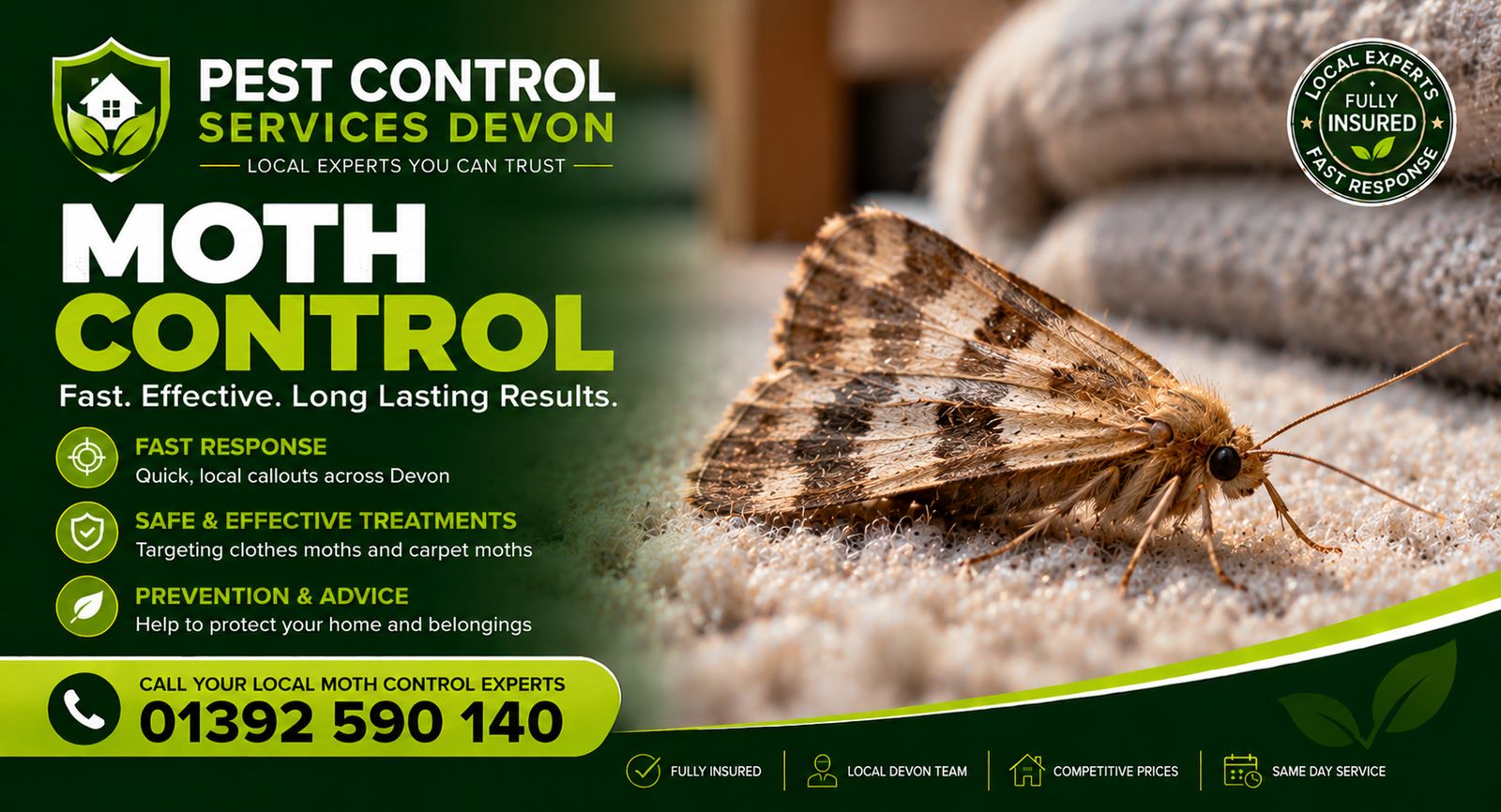
Holes in a jumper, silky webbing in a wardrobe or small buff moths fluttering out of a dark corner are the usual reasons people call us about moths in Exeter. The culprit is rarely the adult you can see. It is the larva, quietly feeding on wool, fur, felt, silk and carpet where nobody looks.
We identify which moth you have, find where the larvae are feeding and treat that spot properly. We work in houses, flats, student lets and businesses across the city.
Exeter has a lot of variety under its roofs: older terraces with suspended floors, student houses that change hands every year, newer estates and flats above shops. Moths do well in any of them, because all they need is undisturbed fabric, a little warmth and some dust or hair to feed on.
Rented rooms and second-hand furniture are common ways for larvae to arrive. A rug bought at a market, a wool coat left in a loft or a sofa moved in with the last tenants can all carry eggs. Nobody is at fault, and a moth problem says nothing about how clean a home is.
In Exeter we start by working out the type. Clothes moths and carpet moths feed on natural fibres and leave irregular holes and silky tunnels, while pantry moths turn up in flour, cereal, rice and dried fruit. The treatment is different for each, so a proper look at wardrobes, carpet edges, under furniture and any loft space comes first.
Once the source is found we use a targeted treatment where the larvae are living, then explain the rest: hot washing or freezing small items, a thorough vacuum, and sealed bags for clothes kept in storage. Pheromone traps let us monitor whether adults are still around afterwards.
We cover Exeter across the EX1 to EX4 postcodes, including flats, shared houses and small commercial premises such as clothing shops, charity shops and offices with soft furnishings. We also cover Topsham and Crediton if you are just outside the city. If you are not sure whether you have moths or something else, describe what you are seeing and we will help you work it out.
Clothes moth larvae feed on wool, cashmere, silk and fur, usually in dark, undisturbed corners. The adults are small and avoid light, so many people only notice the holes. We inspect the wardrobe, nearby carpet and furniture to find where the larvae are living and treat that area.
Not always, but infested packets of flour, cereal, rice or dried fruit should go. Pantry moths lay eggs in dry food. We check the cupboards, show you what to bin, and treat the cracks and corners where larvae wander off to pupate.
Washing at a high temperature, freezing small items and vacuuming all help a lot. They do not always reach larvae in carpet edges or under furniture, though. A professional look finds the source so the cleaning is aimed at the right place, and traps show whether it has worked.
“I'm really happy with your service - I literally only saw one more flea after you visited, and none in the months since. I would give you a five star review. Great job!”
Lucy Hines“Extinguished wasps in very large nest in our roof space. Prompt response to our phone call and job done effectively.”
Alison Falkner“Highly recommend Stuart. He was very efficient, effective, knowledgeable and reassuringly determined. We tried various methods beforehand to solve the problem ourselves but it took Stuart coming in to eradicate it. We wouldn’t use anybody else.”
Leanne ChristieClothes moth caterpillars feed on wool, fur and other natural fibres, so regular checks, clean storage and tidy habits go a long way to protecting your belongings.
Read the guide →Call us, message us on WhatsApp or send an enquiry. We will agree the price with you before any work starts.