
Advice
Protecting Wardrobes and Carpets From Moths
Clothes moth caterpillars feed on wool, fur and other natural fibres, so regular checks, clean storage and tidy habits go a long way to protecting your belongings.
Read the guide →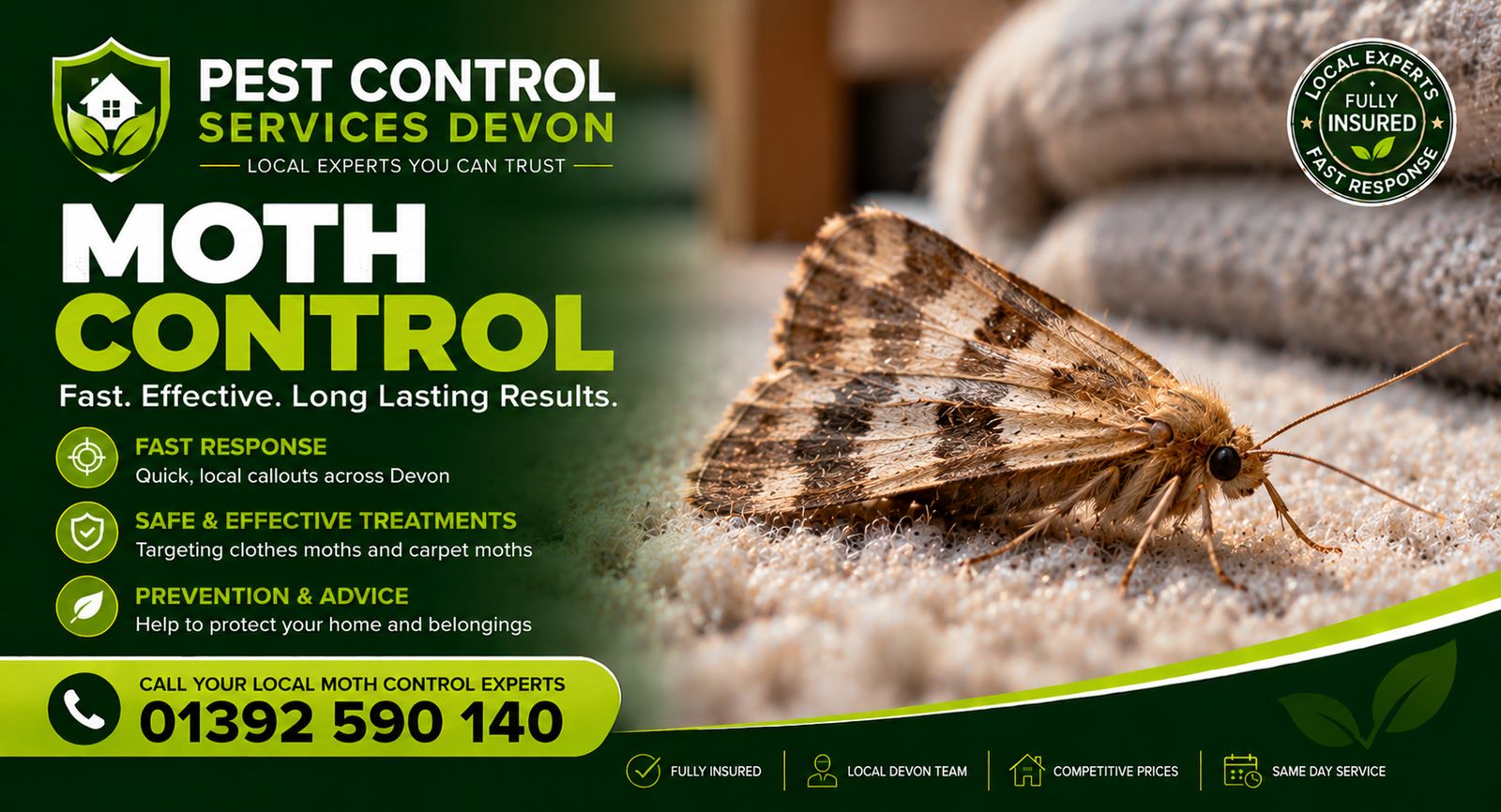
If you have found holes in knitwear, silky webbing or small moths in a dark corner, we can help. We offer moth control in Ottery St Mary for older houses and newer estates alike, starting with a proper look to identify the moth and find where the larvae are feeding.
Moths do not discriminate between old and new homes. What they need is undisturbed natural fibre, so the same problem turns up in a period cottage and a modern bedroom. Finding the true source is what separates a lasting fix from a repeat visit.
A frequent route into a home is second-hand furniture, charity shop clothing, auction rugs or a family heirloom brought out of someone else's attic. Eggs are tiny and invisible, so a perfectly clean-looking wool coat can bring a colony with it. Once indoors, larvae feed quietly on wool, fur, felt and silk.
Ottery St Mary has an older centre with plenty of period property, and newer estates on the edges. Either way, the places we check are the same: the back of wardrobes, under sofas, along carpet edges, inside blanket boxes and around radiators where fluff and warmth gather.
First we confirm what is flying about. Clothes moths, carpet moths and pantry moths look similar to most people but live very differently. We examine fabric damage, webbing and the insects themselves, then check the surrounding areas to see how far it has spread.
Next, we treat the active areas of your Ottery St Mary home with a targeted approach and explain what to do alongside it. That means hot washing or freezing smaller items, vacuuming rugs and cupboard corners thoroughly, and bagging out-of-season clothing. After that, pheromone traps help us monitor the property and confirm whether any adults remain.
With farmland close to Ottery St Mary, some customers also find moths and beetles in outbuildings or stored feed sacks, and we can look at those if they are connected. We also cover Sidford and Whimple. If you are in EX11 and have found damage, tell us what you have seen and we will arrange a visit.
Yes, it is one of the commonest routes. Eggs and larvae hide in upholstery, rugs and seams. Checking items before they come in, and keeping new arrivals apart for a few weeks, helps you spot a problem early.
Rarely. Washable items can be hot washed, small items can be frozen, and carpets and furniture can be vacuumed and treated. Badly chewed pieces may be worth discarding, but we will tell you honestly what is worth saving.
Pheromone traps are the simplest check. If they stay empty for several weeks and no new damage appears, that is a good sign. We can look at the trap catches with you and decide whether a follow-up visit is needed.
“We discovered a large wasp nest in our loft and needed someone to come out quickly. Devon Pest Services responded the same day, explained exactly what they were doing and removed the nest safely and professionally. The technician was friendly, knowledgeable and gave us advice to help prevent future problems. Brilliant service from start to finish and excellent value for money. Highly recommended!”
Shelley“Nothing was a problem. Quick response, very professional. problem sorted very quickly at a very reasonable cost. Definitely use again.”
Paul Elmore“Paul was very prompt and very knowledgeable. The problem was handled quickly and would highly recommend.”
Sharon ClakeClothes moth caterpillars feed on wool, fur and other natural fibres, so regular checks, clean storage and tidy habits go a long way to protecting your belongings.
Read the guide →Call us, message us on WhatsApp or send an enquiry. We will agree the price with you before any work starts.