
Advice
Protecting Wardrobes and Carpets From Moths
Clothes moth caterpillars feed on wool, fur and other natural fibres, so regular checks, clean storage and tidy habits go a long way to protecting your belongings.
Read the guide →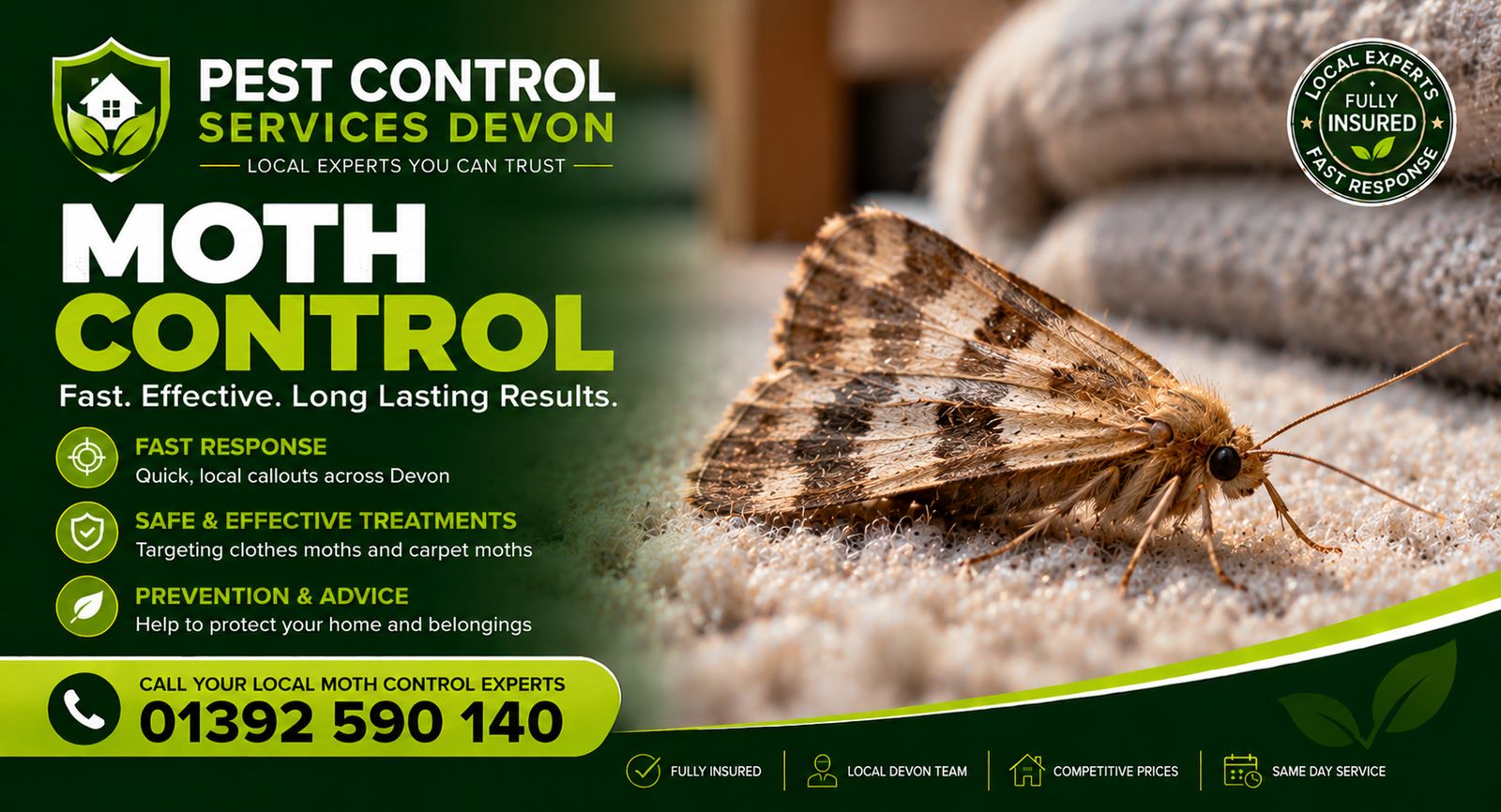
Sidbury has older cottages, farms and open countryside around it, and that mix brings its own moth problems. We provide moth control in Sidbury for homes and rural properties, finding clothes moths and carpet moths where they feed, then treating them in a calm, targeted way.
Old houses hold a lot of textiles. Wool rugs, blankets, curtains, coats and boxes in the loft can all feed a colony for years if nobody looks. We check the likely spots and explain what we find, so you know what is happening before any work starts.
In older Sidbury homes, moths love the places that rarely get disturbed: the back of a spare wardrobe, a chest of blankets, the underside of a wool rug or the gap beneath a heavy dresser. Natural fibres, a little dust and pet hair give larvae plenty to eat.
Lofts matter too. Old nests from other animals, stored carpets, and insulation with trapped fibres can all support moth and carpet beetle larvae. If you have farm buildings or outbuildings with stored fabric, blankets or feed sacks nearby, tell us, because the same insects may move between buildings and into the house.
We work through the house in order: wardrobes, drawers, carpets, upholstery, curtains and loft space. We look for adult moths, silk webbing, cast skins, pale tracks and gritty droppings. This tells us whether it is clothes moth, carpet moth or something else entirely, such as carpet beetle, which needs a slightly different plan.
Treatment is aimed at the infested areas only. Wool items can often be washed hot or frozen, and rugs and carpet edges need a good vacuum, which we explain properly. Pheromone traps then go out so we can monitor adults over the following weeks and see whether you still have a source in Sidbury that we missed.
Clean wool before storing it and keep it sealed in bags or boxes, rather than loose in a drawer. Open the wardrobe now and then and vacuum the corners. Around Sidbury we also cover Sidford and Sidmouth, so if you are in EX10 and spotting holes or webbing, we are happy to come and take a look.
Yes. Stored carpets, old blankets, insulation and abandoned animal nests can feed larvae in a quiet loft. We include the loft in our inspection when there are signs of damage downstairs, because that is often where the colony started.
They can. Stored sacks, blankets and woollen items give moths and beetles somewhere to breed, and adults will fly or crawl indoors. Tell us about nearby buildings and we will check whether they are part of the picture.
Both chew natural fibres and leave holes, but the larvae look different, and beetle larvae are small and bristly rather than pale and silky. We identify which you have first, because the treatment and the advice are not quite the same.
“Paul came out very promptly was very knowledgeable and soon got rid of the rats. Would 100% recommend him.”
Liz Porter“Excellent service. Extremely prompt, knowledgeable and very efficient. Would definitely recommend this business.”
Pat Hore“Very good service. Even came an additional time to be absolutely certain he had cleared up our mice problem.”
Richard ChestertonClothes moth caterpillars feed on wool, fur and other natural fibres, so regular checks, clean storage and tidy habits go a long way to protecting your belongings.
Read the guide →Call us, message us on WhatsApp or send an enquiry. We will agree the price with you before any work starts.