
Advice
Protecting Wardrobes and Carpets From Moths
Clothes moth caterpillars feed on wool, fur and other natural fibres, so regular checks, clean storage and tidy habits go a long way to protecting your belongings.
Read the guide →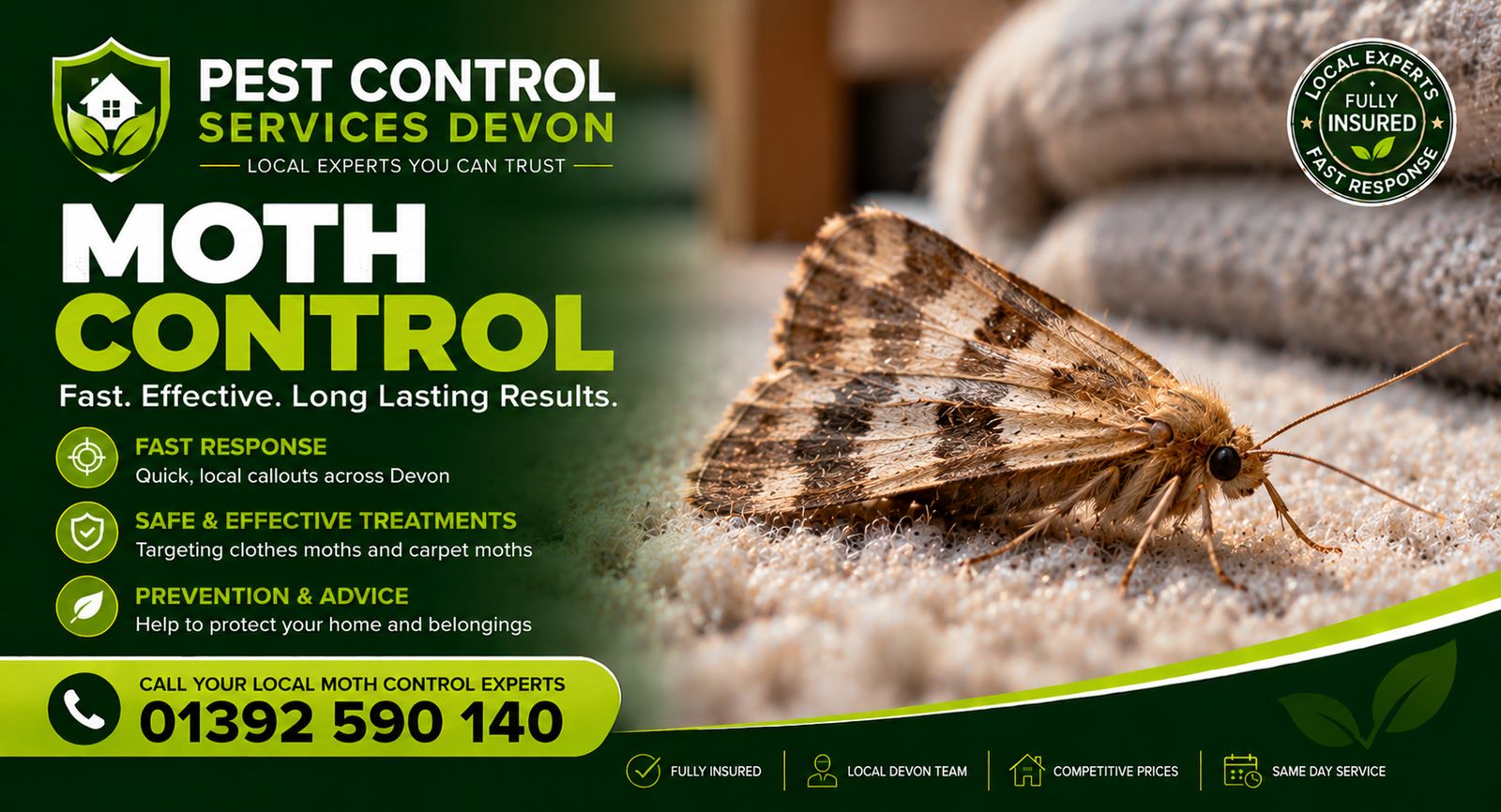
A little moth in the kitchen or a hole in a wool scarf can point to a bigger problem than it looks. We handle moth control in Sidford for householders, and the first job is always working out whether you are dealing with pantry moths, clothes moths or carpet moths.
The answer changes everything, because each feeds on something different. Pantry moths want dry food, while clothes and carpet moths want wool, fur and natural fibres. We look at the evidence, find the source and deal with that, rather than just clearing the flying adults.
If you see small moths near your food cupboards, check flour, cereal, rice, dried fruit and pet food for webbing, clumps and tiny caterpillars. Larvae can chew through thin packaging and wander well away from the packet to pupate, which is why moths turn up in the lounge or bedroom.
Sidford homes range from older properties to newer ones, but kitchens everywhere store dry goods for long stretches. Throw out anything infested, then empty the cupboard, vacuum the corners and shelf edges and wipe it down. Airtight tubs stop a repeat. We confirm the source, treat cracks where larvae hide and set traps to check adults have stopped.
Clothes moths are a separate issue. They favour wool, cashmere, felt and silk, especially items that have been stored dirty or left alone. Look at the folds, the underside of collars and the back of wardrobes. Carpet moths do similar work along edges and under heavy furniture, leaving thin patches and silky tubes.
In a Sidford house we inspect wardrobes, drawers, carpet edges, the airing cupboard and any loft storage, then treat the infested areas in a targeted way. You help by washing hot or freezing small items, vacuuming thoroughly and bagging out-of-season clothes. We then use pheromone traps to monitor and show whether the treatment has worked.
Sidford sits in the River Sid valley, but moths are an indoor problem and do not depend on the weather outside. They arrive in second-hand furniture, secondhand clothing or even on shopping. We also cover Sidmouth and Ottery St Mary, and if you are in EX10 and finding damage, we can inspect and explain exactly what needs doing.
Pantry moths usually arrive in a packet of flour, cereal or dried fruit from the shop, so tidiness is not the cause. Larvae can sit in one forgotten bag. Checking every dry item and storing food in sealed tubs usually stops them coming back.
Not always. Pantry moth larvae often crawl out of the kitchen to find a quiet place to pupate. We look for fibre damage and food sources, then tell you which type you have before suggesting any treatment.
We usually leave them for several weeks so they catch any adults that appear. A trap that stays empty is a good sign, while one that keeps catching tells us there is still a source nearby to track down.
“Someone who knows his business and not a rip off merchant.”
David Buckland“Paul dealt with our flea Problem quickly and effectively Stuart was extremely helpful and professional and I can highly recommend this company. From A very satisfied customer”
P Shaldon Devon“Great post fast removal of the wasp nest and very freindly Thanks”
Alvan SpicerClothes moth caterpillars feed on wool, fur and other natural fibres, so regular checks, clean storage and tidy habits go a long way to protecting your belongings.
Read the guide →Call us, message us on WhatsApp or send an enquiry. We will agree the price with you before any work starts.