
Advice
Protecting Wardrobes and Carpets From Moths
Clothes moth caterpillars feed on wool, fur and other natural fibres, so regular checks, clean storage and tidy habits go a long way to protecting your belongings.
Read the guide →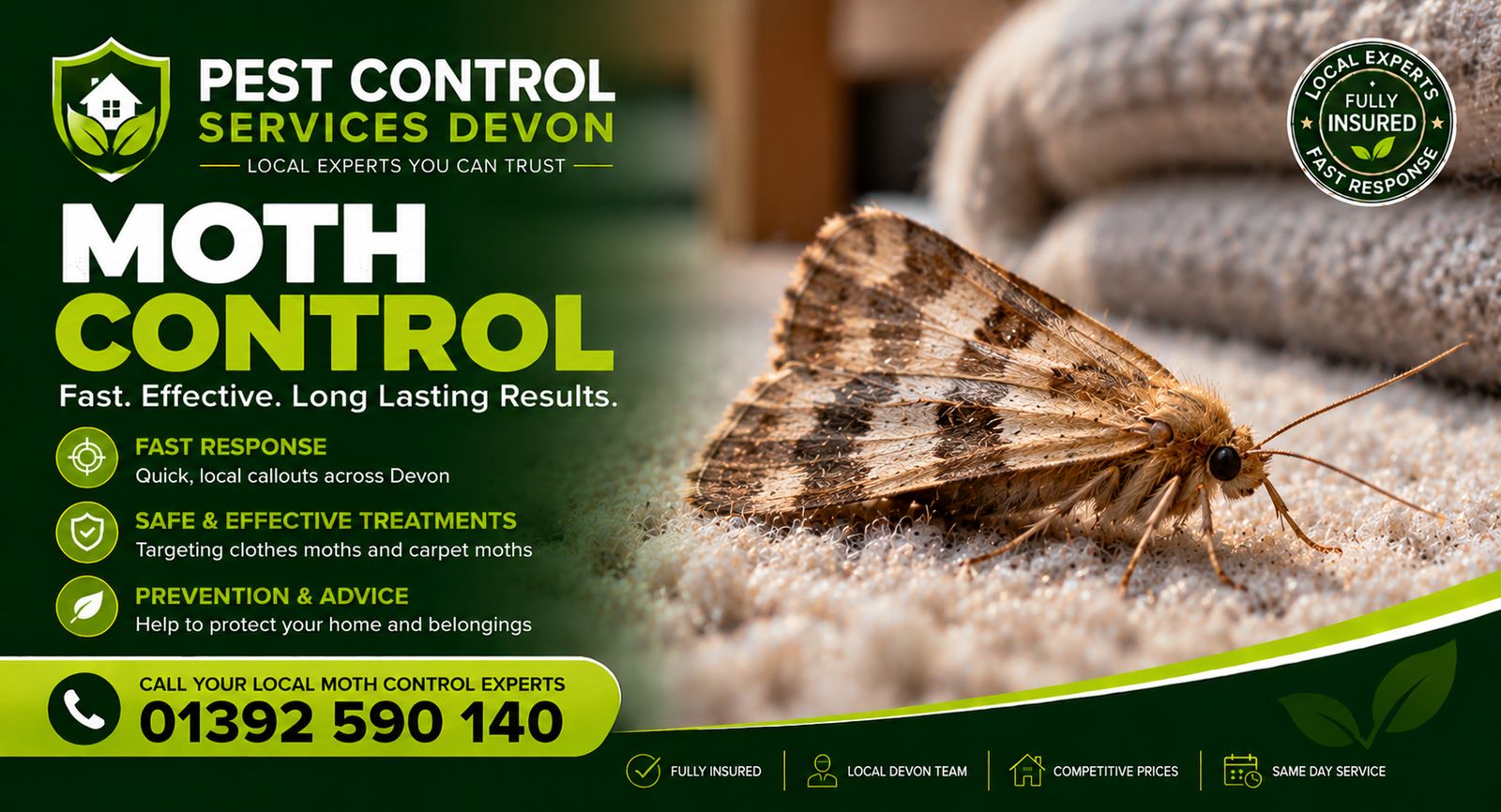
In a seaside town like Teignmouth, plenty of properties are second homes, lets or flats that are not occupied all week. Add soft furnishings and you have the conditions moths like: quiet, warm and undisturbed. If you have noticed webbing, holes or small buff moths, it is worth a proper look.
We identify the moth, find the infested spot and treat it.
Teignmouth has a seafront, a working harbour and a mix of older and newer homes. A flat shut up for the winter can have a wool carpet, curtains and a wardrobe full of clothes that no one has touched for months. That is all a clothes moth needs.
Around the harbour, small food businesses and stores can be bothered by pantry moths in dry goods, particularly where stock is not turned over often. In older houses it is more likely to be a rug, upholstery or the loft. We work out which it is before we do anything.
We look at the damage you have found in Teignmouth, then inspect wardrobes, drawers, carpets, furniture and any roof space. If we suspect pantry moths we check the kitchen and store cupboards too. Finding live larvae or cases tells us a lot about where the problem began.
We then carry out a targeted treatment where it is needed, and go through the follow-up: washing hot, freezing small items, vacuuming thoroughly, and sealing woollens and spare bedding in bags or boxes. We place pheromone traps so you can monitor, and you can ask us back if moths keep appearing.
We cover Teignmouth throughout the TQ14 postcode area. We also cover Shaldon across the estuary and Dawlish along the coast. If you look after a holiday let or second home here, tell us when it was last used and what you found when you opened up, and we will explain what to check.
Take photos, close the affected room's wardrobes, and avoid moving items around so larvae do not spread. We can inspect, find the source and treat it. Meanwhile wash or freeze what you can, and keep stored fabric in sealed bags.
Yes. Carpet moth larvae feed on wool carpets, especially at the edges, under furniture and in quiet corners. They leave bald patches and silky tunnels. We inspect the carpet edges and underlay area and treat the affected parts.
Any store with dry goods can get them, particularly if stock sits for long. Checking deliveries, rotating stock and using sealed containers reduces the risk. If you spot webbing in packets, tell us and we will find the source.
“Great post fast removal of the wasp nest and very freindly Thanks”
Alvan Spicer“Very professional and knowledgeable- nothing is too much trouble....would highly recommend. Thank you....”
June Salthouse“Paul came out very promptly was very knowledgeable and soon got rid of the rats. Would 100% recommend him.”
Liz PorterClothes moth caterpillars feed on wool, fur and other natural fibres, so regular checks, clean storage and tidy habits go a long way to protecting your belongings.
Read the guide →Call us, message us on WhatsApp or send an enquiry. We will agree the price with you before any work starts.