
Advice
Protecting Wardrobes and Carpets From Moths
Clothes moth caterpillars feed on wool, fur and other natural fibres, so regular checks, clean storage and tidy habits go a long way to protecting your belongings.
Read the guide →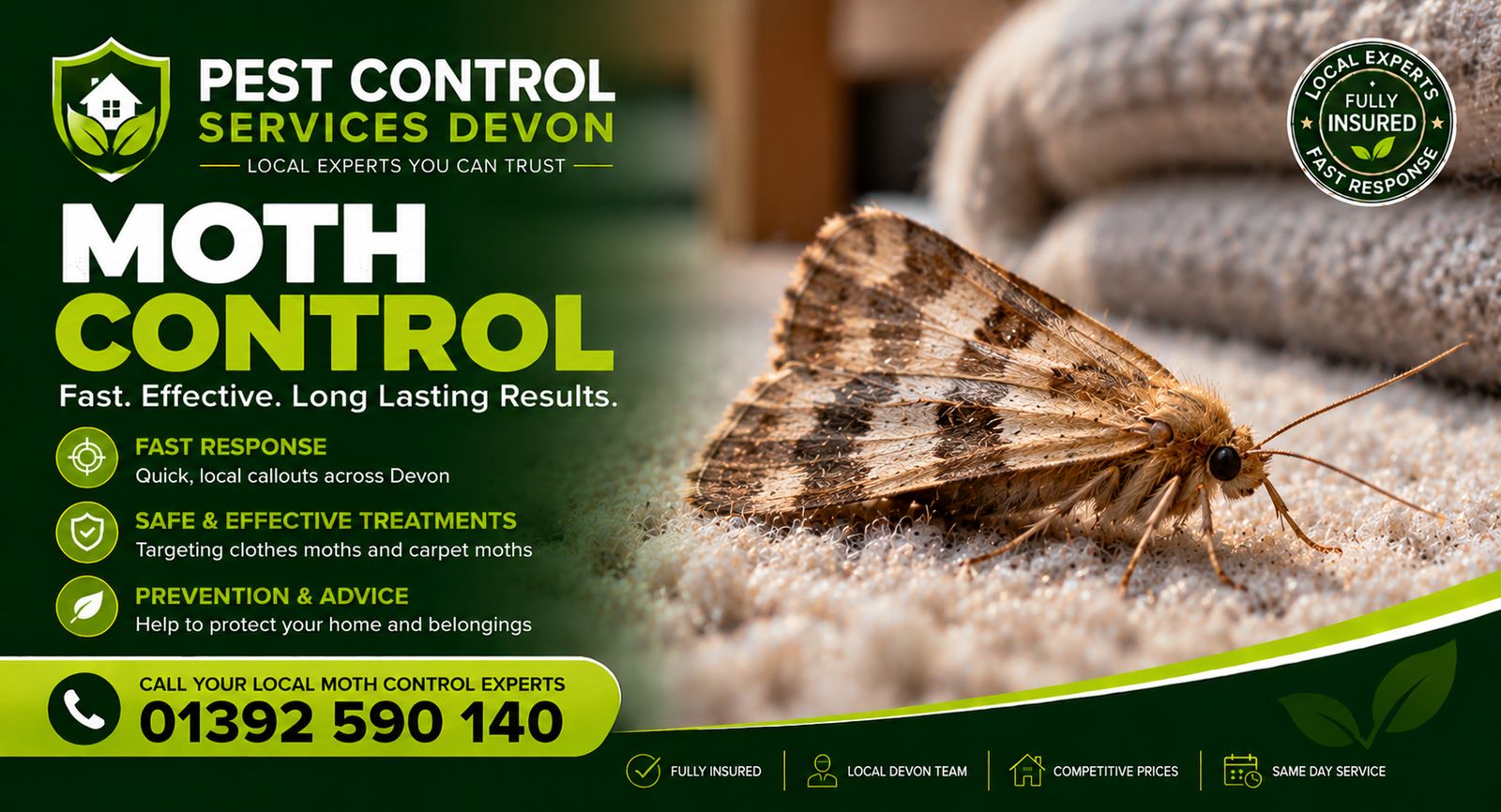
Dawlish sits along the sea wall with homes climbing the hillside above, and moths turn up at every level. A hole in a cardigan, a web of silk in a wardrobe or small pale moths in a kitchen cupboard are the signs. The adults are only half the story: it is the larvae that cause the damage.
We find which kind of moth you have and where it is feeding, then treat that area.
Many Dawlish homes are older, with sash windows, solid walls and chimney breasts, and a lot of people keep wool rugs and heavy curtains to keep the winter chill out. The damp sea air is not a protection. What moths want is undisturbed natural fibre, and a spare room or wardrobe provides it.
Seafront flats and holiday properties are often left shut for a stretch, which gives larvae time. Retired residents sometimes keep drawers of good knitwear for years, and these are well worth checking once a year. A quick look can save a favourite cardigan.
In Dawlish we inspect wardrobes, drawers, carpets, furniture and any loft or understairs space. We look for larvae, silk cases, webbing and the gritty specks they leave behind. If you suspect pantry moths, we check dry food cupboards as well and show you how to spot affected packets.
A targeted treatment goes on the infested areas, and we explain the practical steps: wash hot where fabric allows, freeze small items, vacuum and bag the contents, and store woollens in sealed containers. Pheromone traps let you monitor whether adults are still flying afterwards.
We cover Dawlish in the EX7 postcode area, including flats, bungalows, family homes and small businesses. We also cover Teignmouth and Exmouth. If you are not sure it is moths, tell us what you have found, and we will help you decide whether a visit is needed.
Not directly. Moths need natural fibres and quiet places more than damp. Damp is more linked to booklice and mould. Still, a poorly ventilated wardrobe or room can be a comfortable spot, so good airflow and regular checks help.
They are small, creamy-white caterpillars, often hidden in silky tubes or webbing, with a brownish head. You tend to find them in folded fabric, carpet edges or under furniture. Spotting even one tells us where to look.
Every few months is sensible, and before putting winter clothes away. Wash or dry clean first, since moths are drawn to body oils and food stains, then store in sealed bags. Look at the folds for webbing or gritty specks.
“Highly recommend Stuart. He was very efficient, effective, knowledgeable and reassuringly determined. We tried various methods beforehand to solve the problem ourselves but it took Stuart coming in to eradicate it. We wouldn’t use anybody else.”
Leanne Christie“Excellent service from Devon Pest Services. We had a wasp nest above our garage that was becoming a real concern for the family. They arrived on time, treated the nest efficiently and made sure everything was safe before leaving. Very professional, reasonably priced and great customer service throughout. I wouldn't hesitate to recommend them to anyone in Exeter needing wasp nest removal.”
Stuart Bradley“We discovered a large wasp nest in our loft and needed someone to come out quickly. Devon Pest Services responded the same day, explained exactly what they were doing and removed the nest safely and professionally. The technician was friendly, knowledgeable and gave us advice to help prevent future problems. Brilliant service from start to finish and excellent value for money. Highly recommended!”
ShelleyClothes moth caterpillars feed on wool, fur and other natural fibres, so regular checks, clean storage and tidy habits go a long way to protecting your belongings.
Read the guide →Call us, message us on WhatsApp or send an enquiry. We will agree the price with you before any work starts.