
Advice
Protecting Wardrobes and Carpets From Moths
Clothes moth caterpillars feed on wool, fur and other natural fibres, so regular checks, clean storage and tidy habits go a long way to protecting your belongings.
Read the guide →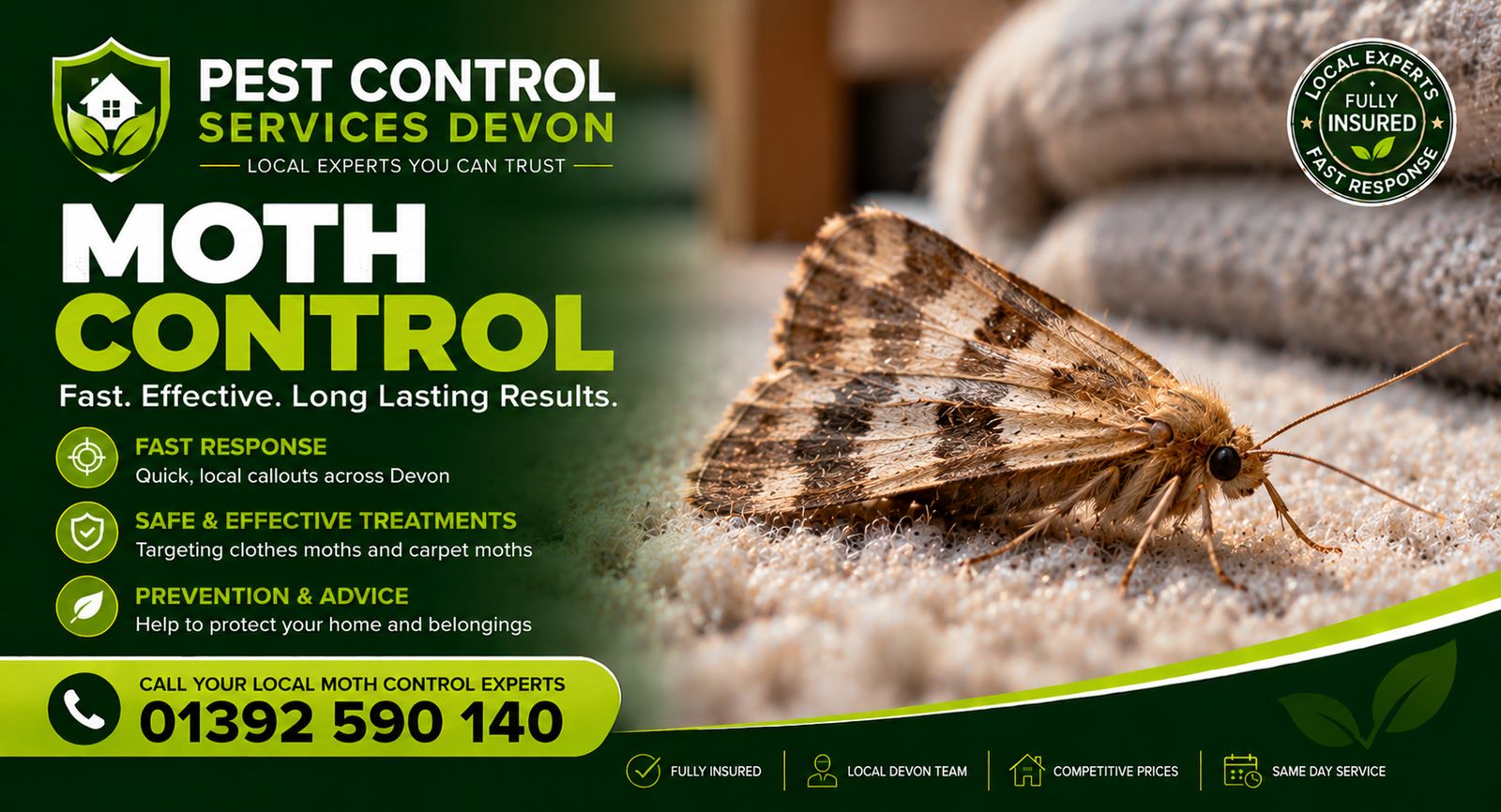
Newton Abbot is a busy market town where older terraces sit beside newer estates, and moths are found in both. Holes in a wool jumper, a rug with thin patches or a flutter of small pale moths when you open a cupboard are the signs that bring people to us.
We identify which type you have, find where the larvae are feeding and treat that spot, with advice you can follow afterwards.
Older Newton Abbot terraces have loft spaces, suspended floors and chimney breasts where fabric and dust collect. Newer estates tend to be warmer and more draught-free, which suits moths just as well. Neither kind of home is more at risk by itself. What matters is how much natural fibre there is and how often it is moved.
Shops, offices and light industrial units around the town have their own issues. Stock rooms with wool, upholstery or dry food can hold moths for a long time before anyone notices. If you run premises, a quick look at the corners of the stock room is a good habit.
We talk through what you have seen in Newton Abbot, then check wardrobes, drawers, carpet edges, under sofas and the loft. We also look in the kitchen if pantry moths are suspected. Larvae are often found along skirting lines and in the folds of stored fabric.
Our treatment is targeted at the infested areas, and we explain the practical steps: hot washing, freezing small items, vacuuming and emptying the cleaner outside, and sealed storage. Pheromone traps are a simple way to tell if the moths are still around, and we are happy to discuss a return visit if they are.
We cover Newton Abbot throughout the TQ12 postcode area, including homes, flats, shops and commercial premises. We also cover Teignmouth and Shaldon, as well as the farmland villages around the town. If you are unsure whether the damage is moths, tell us what you are seeing and we will help you work out the next step.
Clothes moths are small, buff coloured and avoid light. Their larvae eat wool, fur and silk. Pantry moths are usually larger with two-tone wings, and their larvae feed on dry food and spin webbing in packets. The treatment differs, so identifying them matters.
Not always. Light damage can be treated, cleaned and kept. We check the underside and edges to see how far it has gone. A valuable rug may suit professional cleaning, while a badly eaten one may not be worth saving.
Usually only the affected ones and those next to them, but it is worth checking all. We inspect and tell you where the larvae are, so you are not unpacking rooms that are clear. Anything stored near the infested area should be looked at.
“Paul was open to our questions and knowledgeable about everything we asked. He laid traps for mice for us to check, himself checking them over a period of weeks til we were all sure there were no mice on the premises. A friendly and reliable service. Thankyou Stuart!”
Keith Fielder“I'm really happy with your service - I literally only saw one more flea after you visited, and none in the months since. I would give you a five star review. Great job!”
Lucy Hines“Extinguished wasps in very large nest in our roof space. Prompt response to our phone call and job done effectively.”
Alison FalknerClothes moth caterpillars feed on wool, fur and other natural fibres, so regular checks, clean storage and tidy habits go a long way to protecting your belongings.
Read the guide →Call us, message us on WhatsApp or send an enquiry. We will agree the price with you before any work starts.