
Advice
Protecting Wardrobes and Carpets From Moths
Clothes moth caterpillars feed on wool, fur and other natural fibres, so regular checks, clean storage and tidy habits go a long way to protecting your belongings.
Read the guide →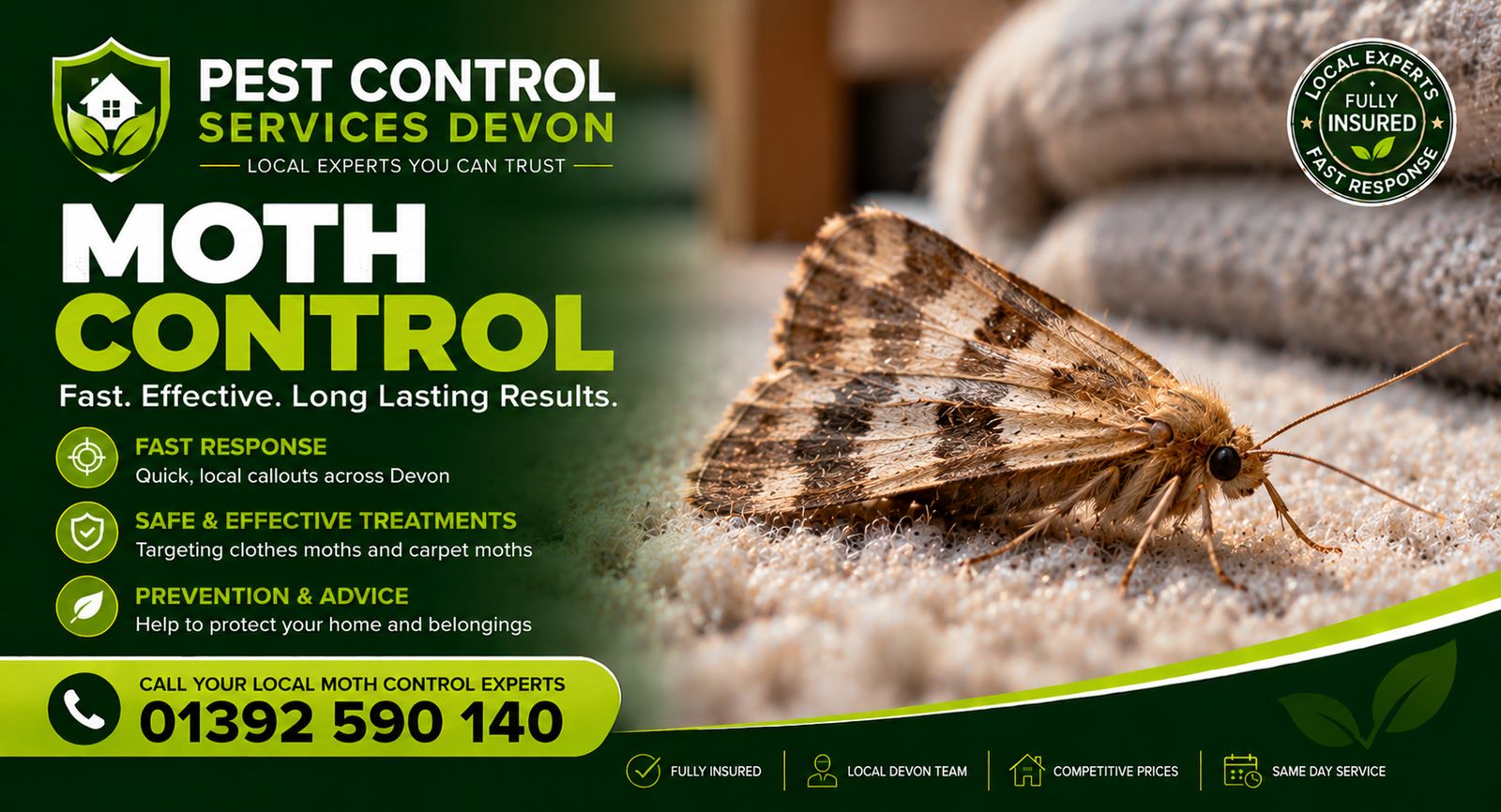
Brixham's steep terraced streets and older houses are lovely to live in and, for moths, ideal. Warm roof spaces, quiet cupboards and fabric that stays put for years give larvae everything they need. If you are seeing webbing, small holes or little buff moths, it is worth acting before they spread.
We identify the moth, find where it is feeding and treat that area.
In older Brixham homes, the trouble spots are often rugs, upholstered furniture, wardrobes and the loft, where old insulation or stored textiles can sit undisturbed. The thick walls and cool corners of an older house suit larvae that can take their time.
Harbourside food businesses and shops face a different moth: the pantry moth. It turns up in dry goods such as flour, grain, dried fruit, nuts and pet food, and a stock room that is not turned over regularly can hold a hidden problem. Checking deliveries and rotating stock are the easiest defences.
We look at what you have found in your Brixham property, then inspect the most likely places: wardrobes, carpet edges, under furniture, the loft and any food stores. Once the species is confirmed we treat the infested spots with a targeted method, and agree the work before we start.
We then go through the follow-up: laundering at a high temperature, freezing small items, thorough vacuuming and sealed storage for woollens. For food premises we point out which stock should be discarded and how to store the rest, and we place traps so you can see whether any adults remain.
We cover Brixham and the TQ5 postcode area, for homes, holiday lets and food businesses. We also cover Paignton and Dartmouth. If you manage a holiday let and have found damage between guests, tell us which rooms are affected and we will say what to look for before we visit.
They mainly damage wool, feathers, fur and natural-fibre insulation or stored textiles, rather than timber or structure. We inspect the loft for old nests, cases and stored fabric and treat what we find, so it does not spread to the rooms below.
Yes. Eggs can arrive in dry goods such as flour, grain, nuts or pet food. Checking deliveries, rotating stock, and keeping dry goods in sealed containers helps. If moths appear, we find the source and treat the store and surrounding cracks.
Wash or dry clean before storing, use sealed bags or boxes, and give wardrobes a regular vacuum around the edges. Unworn wool is the main risk. Traps are a good early warning, and we can advise on where to place them.
“Extinguished wasps in very large nest in our roof space. Prompt response to our phone call and job done effectively.”
Alison Falkner“Highly recommend Stuart. He was very efficient, effective, knowledgeable and reassuringly determined. We tried various methods beforehand to solve the problem ourselves but it took Stuart coming in to eradicate it. We wouldn’t use anybody else.”
Leanne Christie“Excellent service from Devon Pest Services. We had a wasp nest above our garage that was becoming a real concern for the family. They arrived on time, treated the nest efficiently and made sure everything was safe before leaving. Very professional, reasonably priced and great customer service throughout. I wouldn't hesitate to recommend them to anyone in Exeter needing wasp nest removal.”
Stuart BradleyClothes moth caterpillars feed on wool, fur and other natural fibres, so regular checks, clean storage and tidy habits go a long way to protecting your belongings.
Read the guide →Call us, message us on WhatsApp or send an enquiry. We will agree the price with you before any work starts.