
Advice
Protecting Wardrobes and Carpets From Moths
Clothes moth caterpillars feed on wool, fur and other natural fibres, so regular checks, clean storage and tidy habits go a long way to protecting your belongings.
Read the guide →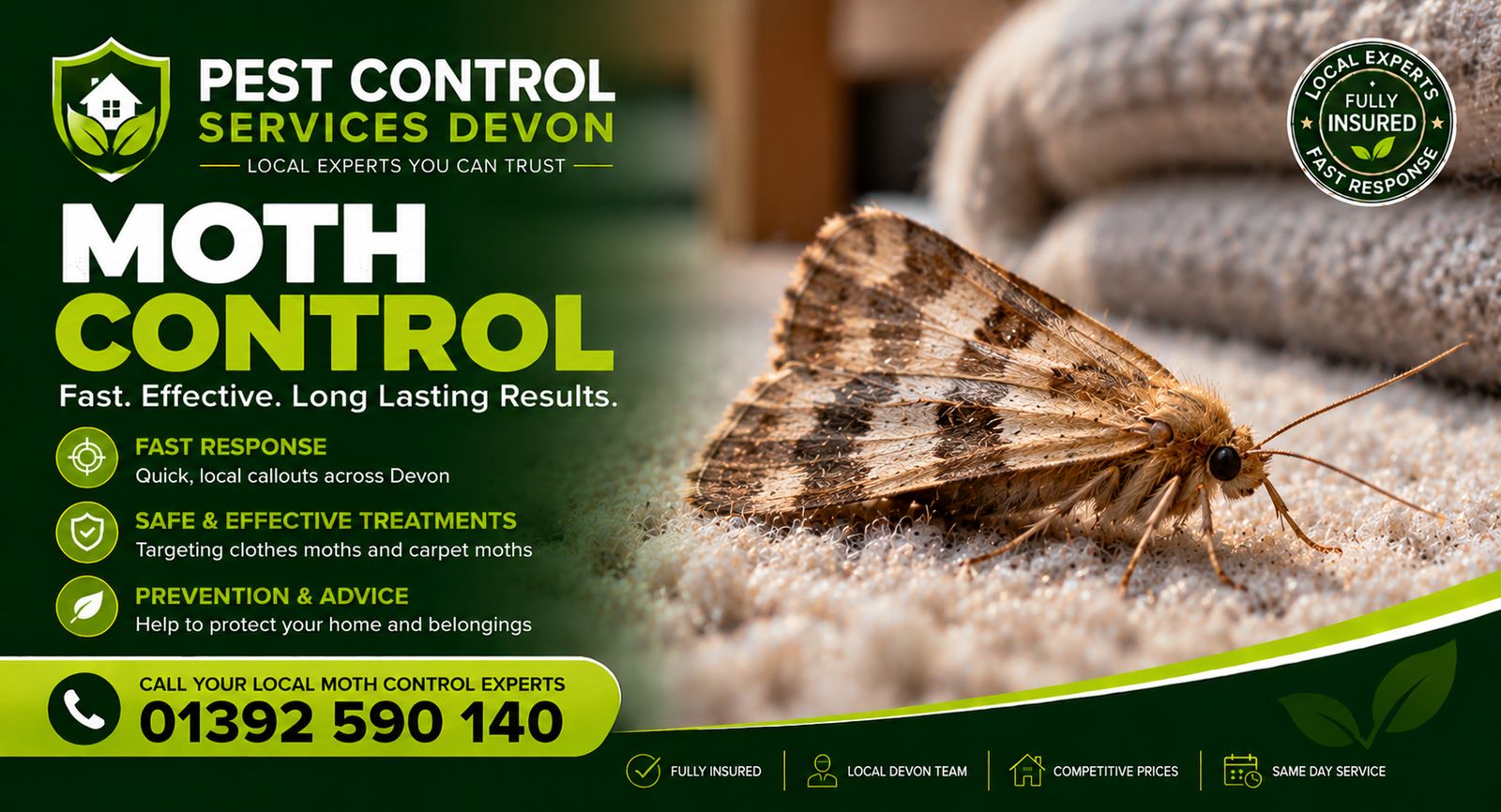
Exmouth has a mix of family homes, seafront holiday accommodation and local businesses, and moths turn up in all of them. If you have found holes in clothes, webbing on a carpet or small moths in the cupboards, we can inspect, tell you what type it is and treat the cause.
We cover Exmouth and the EX8 postcode area. A visit is simple: we look where the damage is, find the breeding spot, treat it and explain what to wash, freeze, vacuum or seal afterwards.
Family houses in Exmouth mean lots of wardrobes, school uniforms, wool coats, rugs and sofas. Larvae feed on wool and on the skin flakes, hair and dust trapped in fabric, particularly in places that are not cleaned often. A spare room or a stored box of clothes can be all they need.
We inspect wardrobes, drawers, under beds, carpet edges and the backs of sofas. The type of damage, the webbing and the moths themselves tell us whether this is clothes moths, carpet moths or pantry moths, which decides where we concentrate treatment.
Holiday accommodation along the seafront and around the marina sees guests come and go, and rooms are sometimes left shut between bookings. Soft furnishings, throws and carpets that stay undisturbed are ideal for larvae. Owners often find out only when a guest reports a hole or a moth in the room.
In Exmouth we can inspect between lets, treat any infested areas and suggest simple monitoring, such as pheromone traps in wardrobes and a quick look at carpet edges during turnovers. Sealed storage for spare bedding also makes a real difference through the season.
Cafes, shops and takeaways in Exmouth can have pantry moths in dry stores, or clothes moths in stock if they sell textiles. The cure includes removing affected goods, cleaning shelving and targeted treatment, then checking deliveries. We also cover Budleigh Salterton and Topsham for anyone based a little further along the coast.
Probably pantry moths. They breed in dry food such as flour, cereal and rice, and the larvae spin webbing. Check and bin infested packets, clean the shelves and store food in sealed containers. We can treat if it continues.
Freezing small items for long enough can kill larvae and eggs, and hot washing does the same for items that can take it. Sealing them in bags afterwards helps stop them being reinfested.
Yes, and it is a good time. Rooms are quieter, so we can check wardrobes, carpets and furnishings thoroughly and treat any problems before the next set of guests arrive.
“Someone who knows his business and not a rip off merchant.”
David Buckland“Paul dealt with our flea Problem quickly and effectively Stuart was extremely helpful and professional and I can highly recommend this company. From A very satisfied customer”
P Shaldon Devon“Great post fast removal of the wasp nest and very freindly Thanks”
Alvan SpicerClothes moth caterpillars feed on wool, fur and other natural fibres, so regular checks, clean storage and tidy habits go a long way to protecting your belongings.
Read the guide →Call us, message us on WhatsApp or send an enquiry. We will agree the price with you before any work starts.